

The Art of Dressing Freely: Boho Clothes for Women Who Live Auth
The Art of Dressing Freely: Boho Clothes for Women Who Live Auth
There is a particular kind of woman who reaches into her wardrobe not for what is trending, but for what feels true. She chooses clothes for women that reflect how she actually lives — unhurried, grounded, and connected to something real. This is the spirit behind bohemian dressing, and it is far more than an aesthetic. It is a philosophy of getting dressed that prioritises texture, comfort, and meaning over novelty. Whether you are drawn to flowing linen silhouettes, hand-embroidered details, or the quiet luxury of undyed natural fibres, boho clothes for women offer a way of presenting yourself to the world that feels earned rather than performed. In this guide, we explore what authentic bohemian dressing looks like in practice — how it differs from fast fashion trends, how it adapts across occasions, and why so many women today are choosing slow, intentional wardrobes built around natural fabrics and timeless shapes.
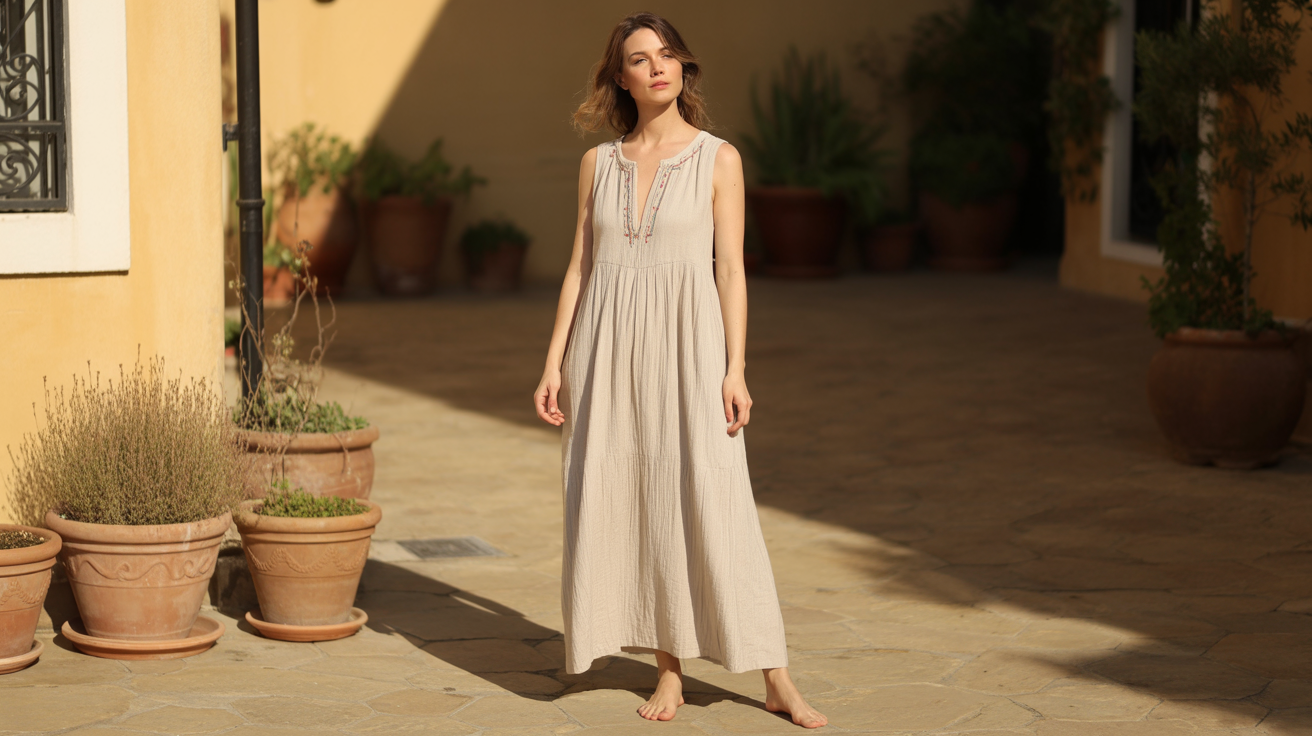
What Bohemian Dressing Actually Means
The word "bohemian" has been borrowed and diluted so many times that it can be hard to know what it still means. In the context of clothes for women today, it does not mean costume. It does not mean a specific print or a particular hemline. At its core, bohemian dressing is about rejecting the idea that clothing must signal status, conformity, or trend awareness. It is closer in spirit to certain traditional approaches — the way Turkish clothes for women layer handwoven textiles with ease, or the way Japanese minimalism in women clothes japan traditions values restraint and natural material over decoration.
Bohemian style draws freely from many visual traditions. You will find echoes of Victorian clothes women wore — the voluminous sleeves, the high necks — reinterpreted in breathable cotton or linen rather than restrictive corsetry. You will find the relaxed ease of Hawaiian clothes for women, the earthy practicality of camping clothes for women, and the quiet elegance of silk clothes for women, all coexisting in a wardrobe that is coherent because it is personal rather than because it follows a single brand directive.
What unifies these influences is a preference for the handmade, the natural, and the lasting. A boho wardrobe is not assembled in a single shopping session. It grows slowly, piece by piece, each item chosen because it genuinely fits the life of the woman wearing it.
Natural Fabrics as the Foundation of Authentic Style
If there is one principle that defines slow fashion dressing, it is this: the fabric is the garment. Before the cut, before the colour, before the silhouette — the material determines how a piece will feel against your skin, how it will age, and how it will interact with your body as you move through the day.
At Lariko Studio, the core fabrics are linen, cotton, wool, and muslin. Each has its own character. Linen softens with every wash and develops a patina that synthetic fibres can never replicate. Wool clothes for women offer warmth that is genuinely thermoregulating — relevant not just for cold weather but for transitional seasons where temperature shifts throughout the day. Muslin, the lightest of the group, drapes with a softness that makes it ideal for layered looks that move with the body rather than against it.
This stands in deliberate contrast to the approach of many mainstream labels. When you look at the product lines of brands like Gucci women clothes or Burberry clothes for women, you are looking at garments where the brand identity is the primary material — the fabric is secondary to the logo, the runway narrative, the seasonal story. There is craft in those garments, certainly, but the relationship between wearer and cloth is mediated by a great deal of marketing. Slow fashion inverts this. The cloth comes first.
Sustainable clothes for women built on natural fibres also age differently. They do not pill into microplastic fuzz. They do not lose their shape after a handful of washes. They become, over time, more themselves — which is precisely what a good wardrobe should do.
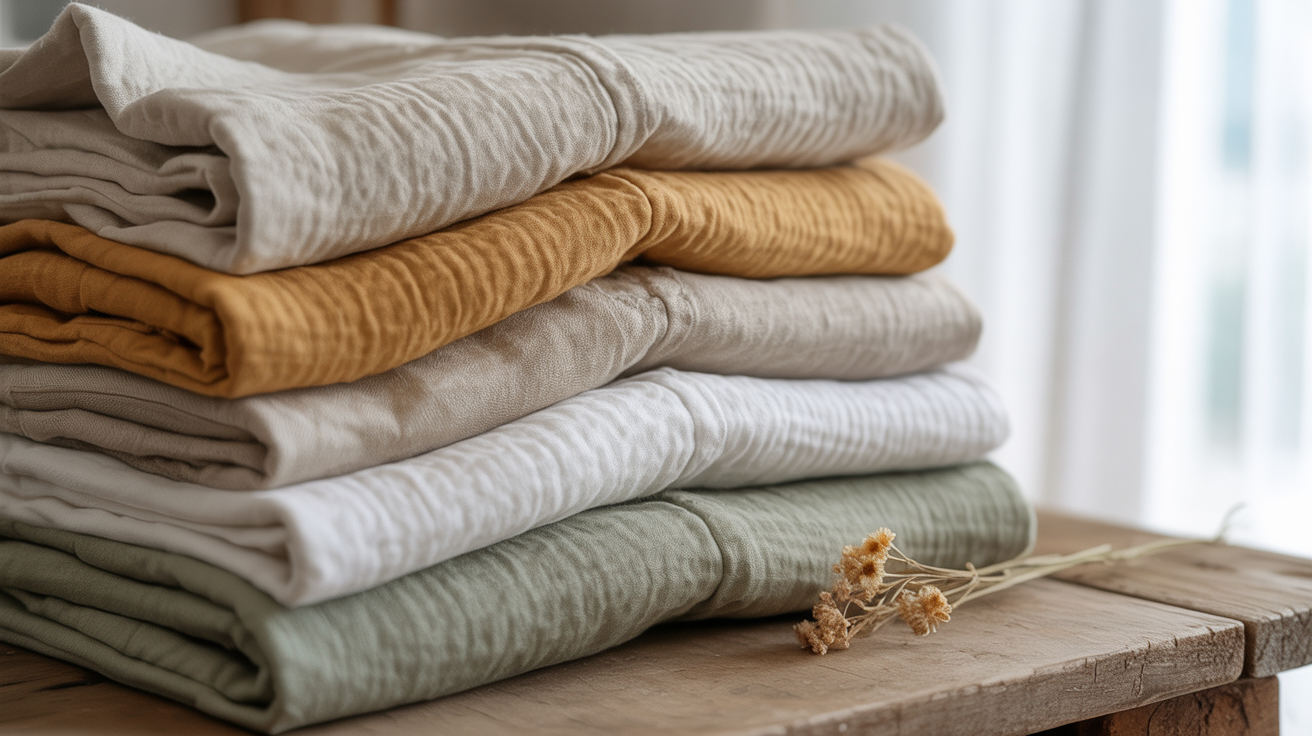
Discover natural fabric pieces from Lariko Studio — crafted for occasions like this:
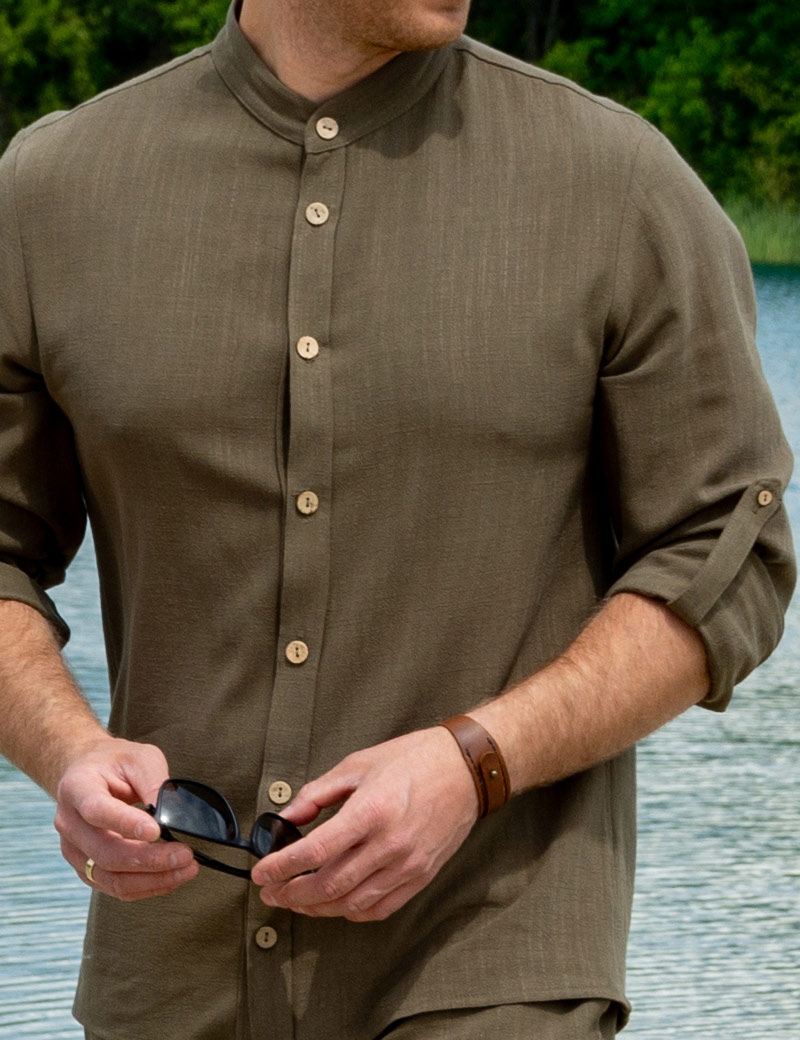
|
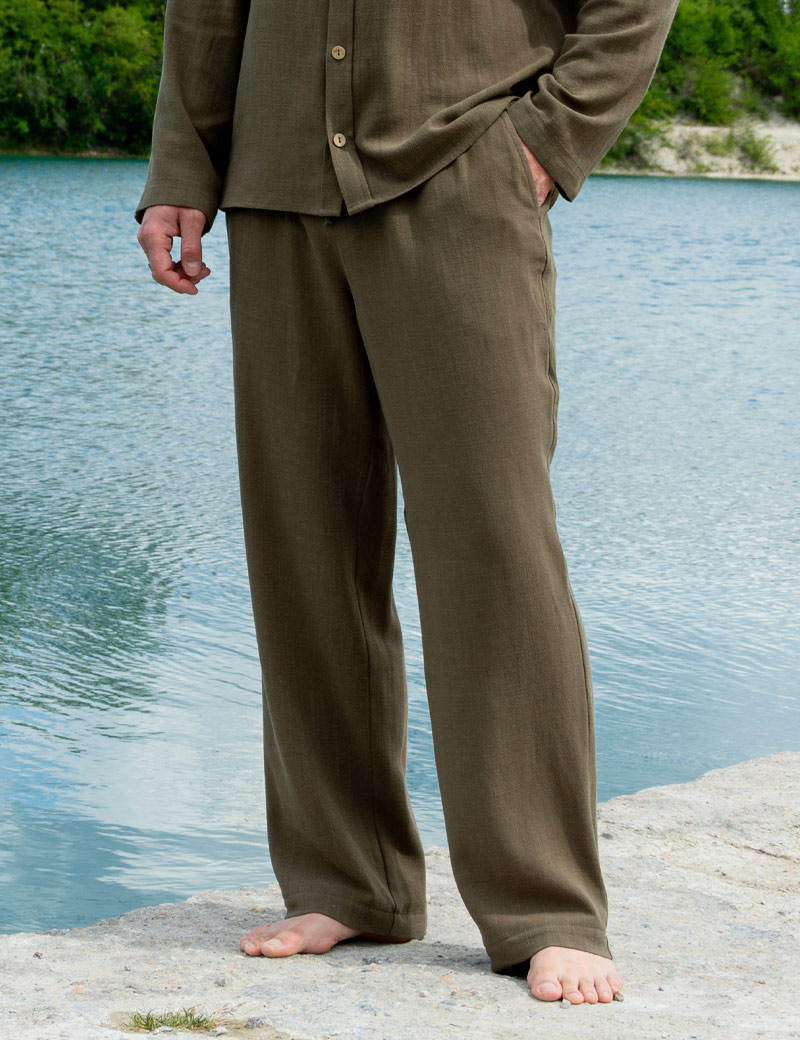
|
Dressing for Real Life: Versatility Without Compromise
One of the most persistent myths about bohemian or slow fashion dressing is that it exists outside of real life — that it is suitable for festivals or weekends but not for the full range of occasions a woman actually navigates. This is simply not true, and it is worth addressing directly.
Consider the question of women clothes for interview settings. The instinct is often to reach for something formal — structured, dark, unmistakably professional. And there are certainly contexts where formal clothes for women in a conventional sense are appropriate. But a well-cut linen shirt in a neutral tone, worn with wide-leg trousers in a natural fabric, communicates competence and self-possession without the stiffness of a conventional power suit. The key is intention. When you dress with care and knowledge, the garments speak clearly regardless of whether they carry a recognisable label.
The same principle applies across a wide range of contexts. Swimming clothes for women can be made from natural fibres — hemp and organic cotton swimwear exists and performs well. Surf clothes for women in the boho tradition lean into the ease and practicality that surfing actually requires, without the synthetic branding of conventional surf labels. Snow clothes for women built on wool base layers are, from a performance standpoint, superior to many synthetic alternatives — wool regulates temperature, resists odour, and remains warm even when damp.
Even in contexts that seem far removed from bohemian aesthetics — hunting clothes for women, camping clothes for women — the slow fashion principle of choosing durable, natural-fibre garments that are fit for purpose holds. Dressing authentically does not mean dressing impractically. It means choosing garments that serve your actual life rather than a projected image of it.
Building a Boho Wardrobe: Key Pieces and How to Style Them
Styling clothes for women in the boho tradition is less about following rules and more about developing a personal visual language. That said, there are a few structural principles that help.
Start with silhouette. Bohemian dressing tends to favour volume — wide sleeves, full skirts, relaxed trousers — but this does not mean shapelessness. The best boho pieces have a clear relationship with the body even when they are not fitted. A gathered waist on a full skirt, a drawstring on wide-leg trousers, a yoke that defines the shoulder line on a loose blouse — these details give structure without constriction.
Layering is central. Unlike preppy clothes women might wear — where each piece is meant to be seen clearly and separately — boho layering creates depth and texture. A muslin dress over a linen slip. A wool cardigan over a cotton shirt. A light shawl that doubles as a wrap. The layers interact with each other and with the light, creating an effect that is more complex than any single piece could achieve alone.
Colour in a boho wardrobe is typically drawn from the natural world — ochre, terracotta, sage, undyed cream, deep indigo from natural dye. This is not a rigid rule, but it is a useful orientation. Natural colours are easy to combine, they age gracefully, and they tend to flatter a wide range of skin tones.
For women who are new to this approach and accustomed to the clear brand identities of labels like Calvin Klein clothes for women, DKNY clothes for women, or Ralph Lauren clothes for women, the shift to a more personal, fabric-led wardrobe can feel disorienting at first. There is no logo to do the work of signalling quality or taste. The garment has to speak for itself. This is, ultimately, a more demanding and more rewarding way to dress.
Explore boho dresses women at Lariko Studio as a starting point — dresses are often the most accessible entry point into bohemian dressing because they offer the full experience of movement, drape, and natural fabric in a single piece.
Slow Fashion and the Ethics of Getting Dressed
The conversation about sustainable clothes for women has become more urgent in recent years, and for good reason. The environmental cost of fast fashion is well documented. But sustainability in dressing is not only an environmental question — it is also a question of what kind of relationship you want to have with your clothes.
Fast fashion encourages a disposable relationship. Garments are cheap enough that replacing them feels easier than caring for them. The result is a wardrobe that is always full but never satisfying — a constant churn of items that never quite become yours.
Slow fashion asks for a different kind of attention. When you buy a linen dress that costs more than a fast fashion equivalent, you are making a commitment. You are choosing to care for it, to wear it many times, to let it become part of your personal history. This is closer to the way clothing worked for most of human history — before the industrial revolution made cloth cheap and the fashion industry made obsolescence profitable.
There is something worth noting here about the diversity of traditional dress traditions that bohemian style draws from. Muslim clothes for women in many traditions prioritise modesty, quality of fabric, and longevity — values that align closely with slow fashion principles. Cowboy clothes for women in the American West tradition were built for durability and function. The embroidery traditions that run through Turkish clothes for women, through Central Asian textiles, through the folk dress traditions of Eastern Europe — all of these represent accumulated knowledge about how to make cloth beautiful and lasting at the same time.
Bohemian slow fashion is, in part, an act of cultural memory — a way of keeping these values alive in a contemporary wardrobe.
If you are curious about how these principles extend beyond women's clothing, the same ethos applies to menswear. Boho Pants for Men at Lariko Studio are made with the same commitment to natural fabrics and considered construction.
FAQ
What makes boho clothes for women different from regular casual wear?
Bohemian clothes for women are distinguished primarily by their relationship to fabric, craft, and intention. Where casual wear is often defined by convenience and price, boho clothing prioritises natural materials, handmade or artisan details, and silhouettes that allow freedom of movement. The difference is felt as much as seen — in the weight of good linen, the softness of worn cotton, the warmth of natural wool.
Can boho clothes work for professional or formal occasions?
Yes, with thoughtful styling. Natural fabrics like linen and cotton in neutral or muted tones can read as polished and professional when cut well and worn with intention. For women clothes for interview contexts, a well-fitted linen blazer or a structured cotton dress in a clean silhouette communicates both competence and personal style. Formal clothes for women in the slow fashion tradition tend to rely on quality of material and cut rather than conventional markers like dark colours or rigid tailoring.
How do I care for natural fabric garments?
Natural fabrics generally benefit from gentle washing at lower temperatures, line drying rather than tumble drying, and storage away from direct sunlight. Linen softens with washing and does not need to be ironed flat — a light press or simply wearing it allows the natural texture to settle. Wool clothes for women should be hand washed or machine washed on a wool cycle and laid flat to dry to maintain their shape.
Is boho style appropriate for all body types?
Bohemian silhouettes — with their emphasis on volume, drape, and ease — are genuinely inclusive. The relaxed fit of most boho garments means they do not rely on a specific body shape to work. Layering adds dimension regardless of figure. The key is proportion: balancing volume at the top with a more defined waist, or pairing wide-leg trousers with a closer-fitting top, creates a coherent silhouette that works across a wide range of bodies.
How is slow fashion different from simply buying expensive clothes?
Price is not the defining characteristic of slow fashion. What matters is the intention behind the garment — how it was made, from what materials, and with what relationship to longevity. A very expensive piece from a luxury label may be beautifully made but is still embedded in a system of seasonal obsolescence. Sustainable clothes for women in the slow fashion tradition are designed to last, to age well, and to be worn across many years and contexts rather than retired after a season.
Conclusion
Dressing freely is not about ignoring the world — it is about choosing your relationship to it with care. Boho clothes for women at their best are a form of quiet self-knowledge: an understanding of what you value, what you need, and what kind of beauty speaks to you. Natural fabrics, considered silhouettes, and a preference for the lasting over the new are not constraints. They are the conditions under which a genuinely personal style becomes possible.
Lariko Studio exists to support exactly this kind of dressing. Every piece in the collection is made from natural fabrics — linen, cotton, wool, muslin — and designed to be worn with the freedom that comes from knowing your clothes are built to last. If you are ready to explore what an intentional, fabric-led wardrobe looks like in practice, browse the full Lariko Studio collection and find the pieces that feel true to how you actually live.
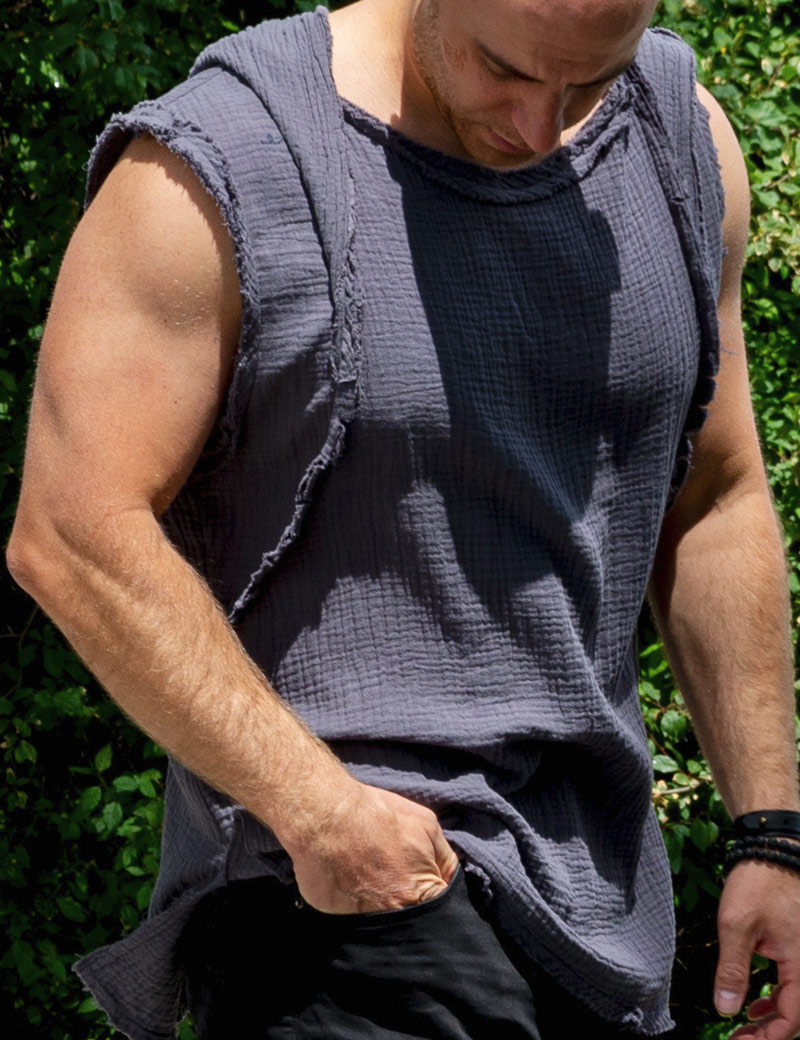
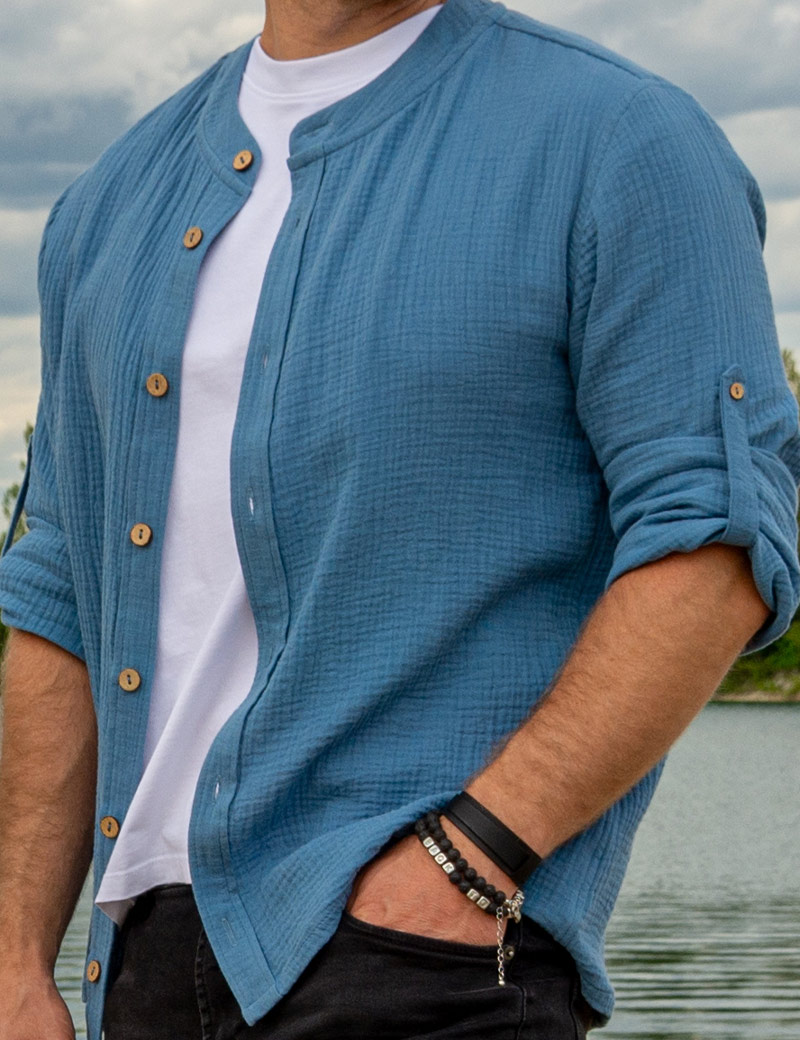
Discover natural fabric pieces from Lariko Studio — crafted for occasions like this:
|
|