

Rooted in Nature: How to Build a Wardrobe of Women's Clothing in
Rooted in Nature: How to Build a Wardrobe of Women's Clothing in
Building a wardrobe that genuinely lasts is one of the most considered decisions a woman can make about how she dresses. In a market as varied as women's clothing in the UK, the options can feel overwhelming — fast fashion cycles, trend-driven collections, and disposable pieces compete for attention at every turn. Yet a quieter movement is growing: one rooted in natural fabrics, honest craftsmanship, and clothing designed to be worn for years rather than seasons. This guide is for those who want to step away from the noise and build something more meaningful — a wardrobe grounded in quality linen, soft cotton, breathable muslin, and warm wool, chosen with intention and worn with ease. Whether you are starting from scratch or refining what you already own, the principles here will help you make choices that align with how you actually live, what you value, and how you want to feel when you get dressed each morning.
Why Natural Fabrics Are the Foundation of a Lasting Wardrobe
The conversation about womens clothing uk buyers are choosing has shifted noticeably in recent years. More women are asking what their clothes are made from, who made them, and how long they will realistically last. The answers point consistently toward natural fibres.
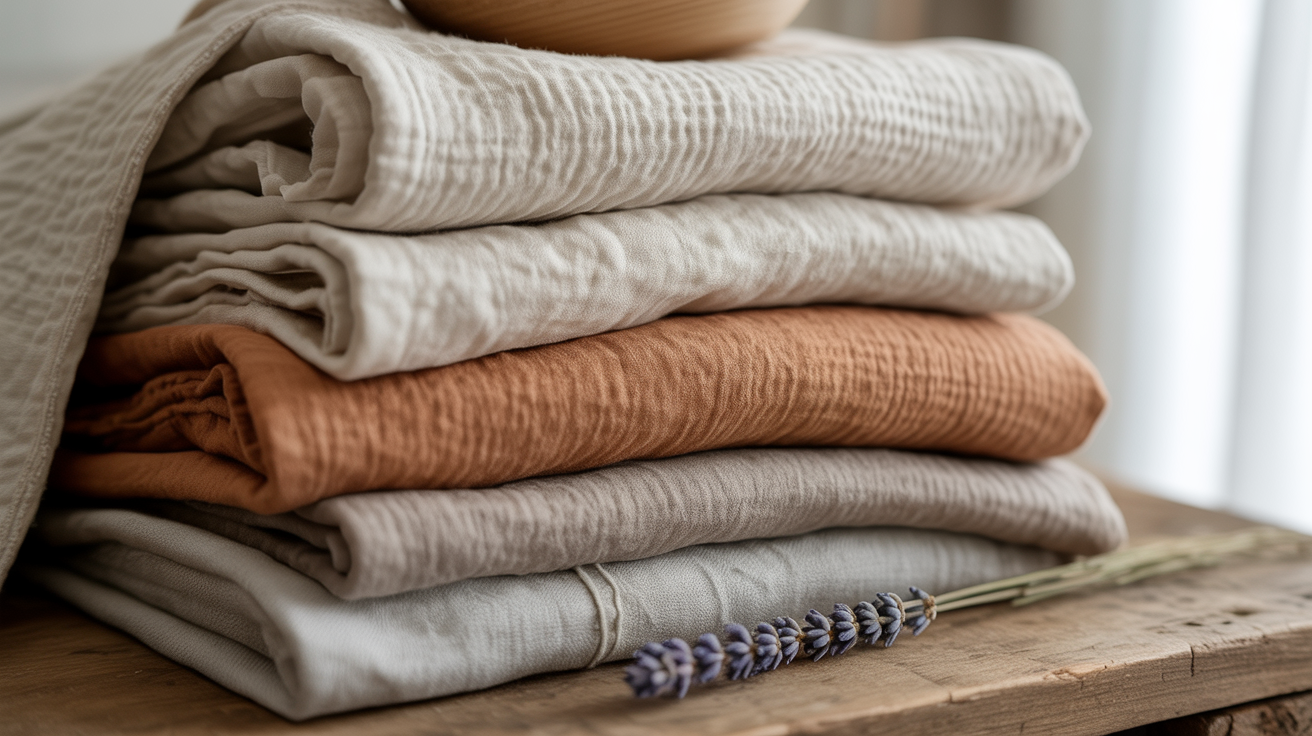
Linen, for instance, is one of the oldest textile materials in the world. It becomes softer with every wash, breathes exceptionally well across seasons, and holds its structure without synthetic assistance. Cotton — particularly unbleached or organic varieties — offers comparable breathability with a gentler drape. Muslin, often associated with layering and loose silhouettes, is lightweight enough for warm months yet can be layered effectively into autumn. Wool, when sourced responsibly, provides warmth without bulk and has a natural resilience that synthetic alternatives simply cannot replicate.
These are not just aesthetic preferences. Natural fabrics biodegrade at end of life, reduce microplastic pollution during washing, and tend to improve with age rather than deteriorating. For anyone building uk womens clothing choices around longevity, the starting point is always the material.
- Linen softens and strengthens with repeated wear and washing
- Organic cotton is gentle on skin and the environment
- Muslin layers beautifully across changing temperatures
- Wool regulates body temperature naturally and resists odour
The Slow Fashion Approach to Building a Wardrobe
Slow fashion is not about buying less for the sake of restriction. It is about buying better — fewer pieces that do more, chosen with care rather than impulse. This philosophy runs counter to the seasonal churn that dominates much of the womens clothes uk market, where collections are refreshed so rapidly that nothing feels worth keeping.
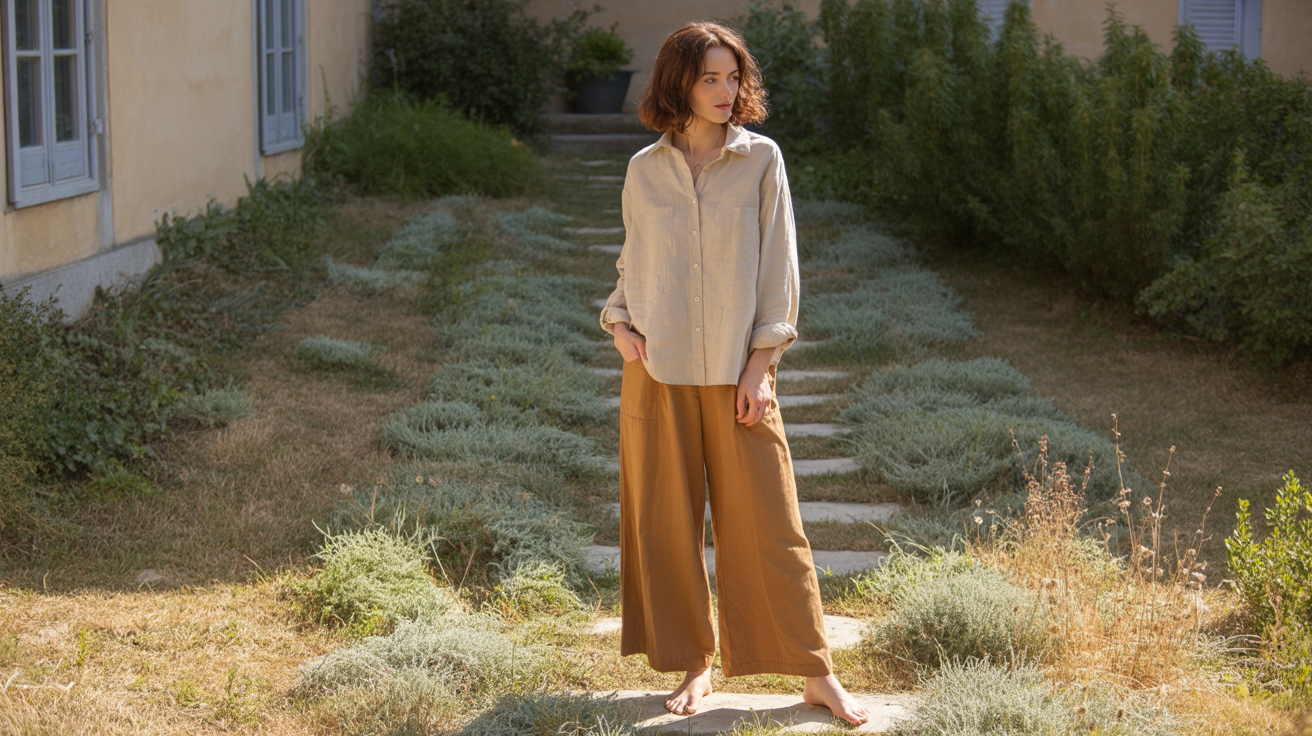
The slow fashion wardrobe is built around versatility. A well-cut linen shirt in a warm neutral can be worn tucked into wide-leg trousers, open over a slip dress, or belted as a light layer over a cotton top. A loose boho dress in undyed muslin works in summer heat, transitions into autumn with a wool cardigan, and layers under an oversized coat in cooler months. These are not rigid outfit formulas — they are starting points for dressing intuitively.
Brands operating within the slow fashion space tend to produce smaller runs, use natural dyes or undyed fabrics, and design pieces with a timeless rather than trend-led sensibility. When compared to the output of labels chasing rapid turnover, the difference in both quality and environmental impact is significant. This is the direction that uk clothing womens shoppers with an eye on longevity are increasingly moving toward.
Practically, the slow wardrobe approach involves a few key habits:
- Choosing pieces that work across at least three different outfit combinations
- Prioritising quality of construction — seams, stitching, and finishing matter
- Washing garments at lower temperatures and air drying where possible
- Repairing rather than replacing when minor damage occurs
- Storing natural fabrics properly to prevent moth damage and unnecessary wear
Discover natural fabric pieces from Lariko Studio — crafted for occasions like this:
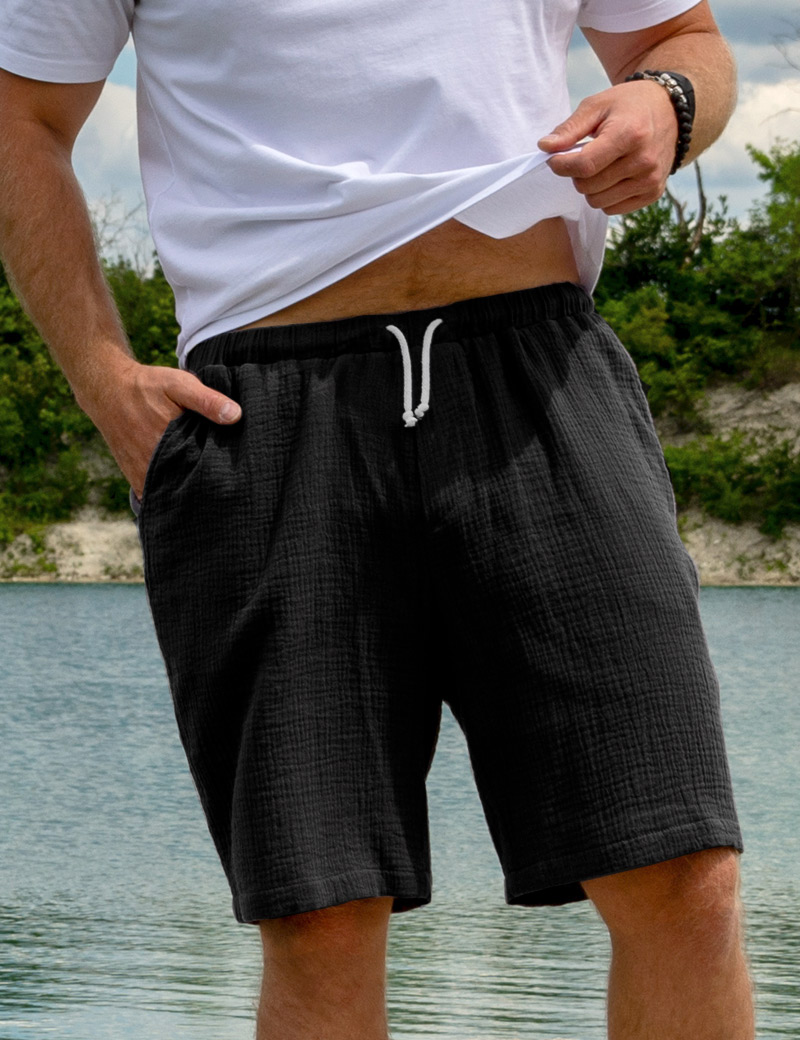
Men's Summer Cotton Shorts - 100% Pure Cotton Comfort, Style & Freedom of Movement | LARIKO Studio |
|
Dressing Through the Seasons: Women's Autumn Clothing and Year-Round Layering
One of the practical challenges of building a wardrobe in the UK is the climate itself. British weather demands adaptability — warm enough for linen in a good summer, cool enough for wool well into spring and autumn, and unpredictable enough to require layering at almost any time of year.
For women's autumn clothing uk wearers, the transition from summer to cooler months is where a natural fabric wardrobe genuinely excels. Linen pieces that carried you through July and August do not get packed away — they become the base layers of September and October. A loose linen shirt worn under a chunky knit, or a cotton dress layered over long-sleeved tops, extends the life of summer pieces without forcing you into an entirely new wardrobe.
Earthy tones work particularly well for year-round dressing. Terracotta, ochre, warm cream, deep olive, and rust are colours that sit naturally within an autumnal palette but do not feel out of place in spring or summer. When your wardrobe is built around a cohesive colour story, layering becomes intuitive rather than effortful.
The boho and ethnic-inspired aesthetic that defines much of Lariko Studio's approach is especially well suited to layered dressing. Loose silhouettes accommodate layering without looking bulky. Textured fabrics — woven cotton, slubby linen, open-knit wool — create visual interest without relying on pattern or colour alone. And the relaxed proportions of boho dressing mean that adding or removing layers does not disrupt the overall look.
Inclusive and Considered: Clothing That Fits Real Lives
A wardrobe built to last must also be built to fit — and fit is not a single standard. The womens outsize clothing uk conversation has evolved considerably, with more brands recognising that natural, flowing silhouettes are inherently inclusive. Loose cuts in linen and cotton do not rely on rigid sizing structures in the way that tailored or stretch-dependent garments do. A generously cut boho shirt or a wide, flowing dress accommodates a range of body shapes without the wearer needing to compromise on style or comfort.
There is also growing awareness around women's adaptive clothing uk — garments designed with ease of dressing in mind for those with physical disabilities or conditions that make conventional fastenings difficult. Natural fabrics again have an advantage here: they are breathable, non-irritating against skin, and tend to be used in looser constructions that allow for greater ease of movement. While adaptive design is a specialist field, the principles of comfort, ease, and dignity that underpin it align closely with the slow fashion ethos.
The broader point is that clothing should serve the person wearing it, not the other way around. A wardrobe built on pure womens clothing uk principles — natural, honest, well-made — respects the wearer's intelligence and individuality rather than asking her to conform to a particular ideal.
Finding Your Style Within the Boho and Indie Landscape
The term "boho" covers a wide range of aesthetics, from heavily embellished festival wear to the quiet, undyed minimalism of Scandinavian slow fashion. Understanding where your own preferences sit within that spectrum is a useful exercise before making purchasing decisions.
At one end, womens indie clothing uk labels tend to favour handmade or small-batch production, unusual prints, and a deliberately non-mainstream sensibility. At the other, brands with a more refined boho approach focus on clean lines, natural textures, and a muted palette. Lariko Studio sits closer to the latter — European in its aesthetic sensibility, grounded in natural fabrics, and drawn to the quiet beauty of unadorned linen and honest construction.
Within the broader womens lagenlook clothing uk tradition — a style originating in Germany that emphasises layered, loose, unconventional dressing — there is a natural overlap with the slow fashion wardrobe. Lagenlook prioritises comfort and individuality over conformity, uses natural fabrics extensively, and tends to age gracefully in a way that trend-driven clothing does not.
For those exploring this space, a few starting points are worth considering:
- Begin with foundational pieces in neutral tones before introducing colour or print
- Invest in one or two well-made Boho Shirts Women that can anchor multiple outfits
- Choose boho dresses women in natural fabrics that transition across seasons
- Look for pieces with interesting texture or weave rather than relying on print alone
- Allow your wardrobe to evolve slowly rather than attempting to overhaul it at once
Brands in adjacent spaces — from yaya womens clothing uk stockists to apricot womens clothing uk retailers — offer points of reference for understanding the wider market, but the clearest guide is always your own sense of what you reach for most often and what genuinely makes you feel at ease.
Caring for Natural Fabrics: Making Your Wardrobe Last
The longevity of a natural fabric wardrobe depends significantly on how garments are cared for. This is an area where a little knowledge goes a long way, and where many well-intentioned purchases are undone by poor maintenance habits.
Linen should be washed at 30 or 40 degrees and ideally line-dried. It will crease — this is a feature, not a flaw, and a light press with a warm iron or a quick steam will restore it when needed. Over time, linen becomes more beautiful with washing, developing a patina that machine-woven synthetics never achieve.
Cotton behaves similarly, though it is slightly more prone to shrinkage on first wash. Washing before wearing for the first time, and consistently washing at lower temperatures thereafter, will preserve both size and shape. Muslin, being lighter, dries quickly and requires minimal care beyond gentle washing.
Wool demands the most attention. Hand washing or a dedicated wool cycle at low temperature, with a wool-specific detergent, will prevent felting and shrinkage. Wool garments should be dried flat rather than hung, and stored with cedar blocks or lavender sachets to deter moths. Pilling, which occurs with friction, can be managed with a fabric comb or shaver — it does not indicate poor quality, merely normal wear.
Caring for your clothes as you would any valued possession is the simplest way to extend their life and reduce the need for replacement. It is also, in a quiet way, a form of respect — for the material, the maker, and the resources that went into producing the garment.
FAQ
What makes natural fabric clothing a better choice for building a lasting wardrobe?
Natural fabrics such as linen, cotton, muslin, and wool are durable, breathable, and improve with age. Unlike synthetic materials, they do not degrade through washing in the same way, are gentler on skin, and have a significantly lower environmental impact over their lifetime. For anyone building a wardrobe intended to last, natural fibres are the most reliable foundation.
How do I find womens clothing in the UK that aligns with slow fashion values?
Look for brands that are transparent about their production methods, use natural or organic fabrics, produce in small quantities, and design with longevity rather than trend cycles in mind. Reading about a brand's sourcing and manufacturing practices — rather than relying solely on marketing language — is the most reliable way to assess alignment with slow fashion values.
Can boho and lagenlook styles work for everyday dressing, not just special occasions?
Absolutely. The loose silhouettes, natural fabrics, and layering-friendly construction of boho and lagenlook clothing make them particularly well suited to daily wear. These styles prioritise comfort and ease of movement, which translates well to the varied demands of everyday life — from working at home to running errands to social occasions.
How should I approach building a capsule wardrobe in a boho aesthetic?
Start with a small number of versatile foundation pieces — a couple of well-cut linen shirts, one or two flowing dresses, a neutral knit, and comfortable wide-leg trousers. Choose a cohesive colour palette centred on earthy neutrals. Add texture through fabric weave and layering rather than relying on print. Build slowly, replacing or adding pieces only when you have identified a genuine gap.
Is natural fabric clothing suitable for women's autumn clothing needs in the UK?
Yes, and this is one of the strengths of a natural fabric wardrobe. Linen and cotton pieces worn in summer transition naturally into autumn as base layers. Wool and heavier cotton knits provide warmth without the stuffiness of synthetic fibres. The layering possibilities within a natural fabric wardrobe make it particularly well adapted to the variable conditions of a British autumn.
Building a wardrobe of women's clothing in the UK that truly lasts is not a single purchase or a seasonal project — it is an ongoing practice of choosing well, caring thoughtfully, and allowing your wardrobe to reflect who you are rather than what the market tells you to want. At Lariko Studio, every piece is designed with this in mind: natural fabrics, honest construction, and a quiet aesthetic rooted in the European boho tradition. If you are ready to explore clothing made to be worn and loved for years, browse the Lariko Studio collections and find the pieces that belong in your wardrobe.
Discover natural fabric pieces from Lariko Studio — crafted for occasions like this:

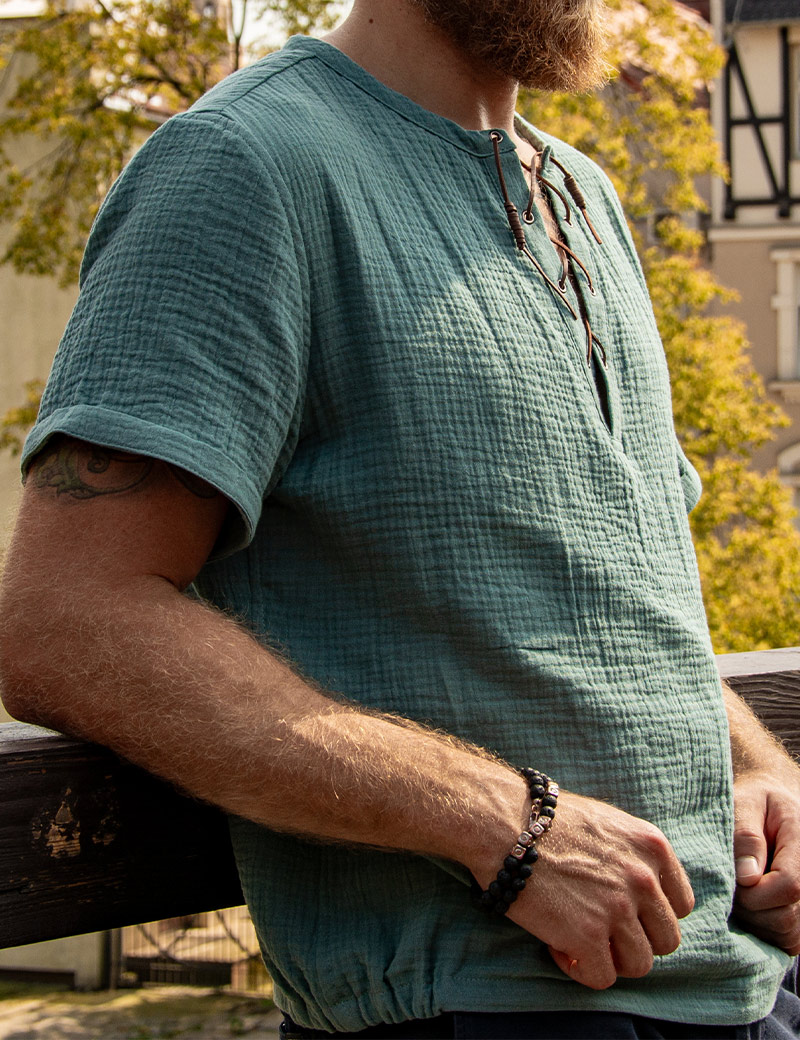
Men's T-shirt with embroidery of the Scandinavian symbol Valknut in Viking style, model Bjorn |

|