

Slow Cloth, Sacred Day: Choosing Natural Fabric for a Wedding
Slow Cloth, Sacred Day: Choosing Natural Fabric for a Wedding
When you begin looking for a dress for a wedding — whether you are the one getting married or someone honoring the occasion as a guest — the first question most people ask is about style or color. A quieter, more meaningful question might be: what is this dress actually made of? The fabric a garment is cut from shapes how it moves, how it breathes, how it photographs, and how it feels against your skin during one of the longest and most emotionally charged days of your life. At Lariko Studio, we work with natural textiles — linen, cotton, muslin, wool — and we believe that choosing a natural fabric dress for a wedding is not a compromise; it is a considered, beautiful decision that connects the ceremony to something older and more grounded than fast fashion ever could.
Why Fabric Matters More Than You Think
Most conversations about dressing for wedding occasions focus on silhouette, neckline, or hemline. Fabric is treated as a footnote. But anyone who has worn a synthetic dress through a summer ceremony — or spent six hours in a stiff, non-breathing gown — understands that fabric is the foundation of how you experience the day.
Natural textiles have a biological logic to them. Linen, woven from flax, is one of the oldest fabrics known to human culture. It regulates temperature, wicks moisture, and softens with wear and washing. Cotton breathes in a way that polyester simply cannot replicate. Muslin — often dismissed as a dressmaker's toile fabric — is in fact an extraordinarily refined plain-weave cotton that drapes with a quiet elegance. Wool, in its lighter gauze and crepe forms, holds warmth without bulk and gives garments a sculptural quality.
When you are dressing for a wedding that will last from early afternoon into evening, across a garden ceremony, a barn reception, or an outdoor farm setting, these properties are not aesthetic preferences. They are practical necessities. A linen or cotton dress that begins the day looking relaxed will still look considered by candlelight. A synthetic dress that begins the day looking polished often ends it looking wilted.
The Aesthetic Language of Natural Fabric Dresses
There is a visual quality to natural textiles that no synthetic can convincingly reproduce: a gentle irregularity in the weave, a softness in the way light falls across the surface, a drape that moves with the body rather than against it. These qualities have given rise to several distinct wedding aesthetics that have grown steadily in cultural resonance.
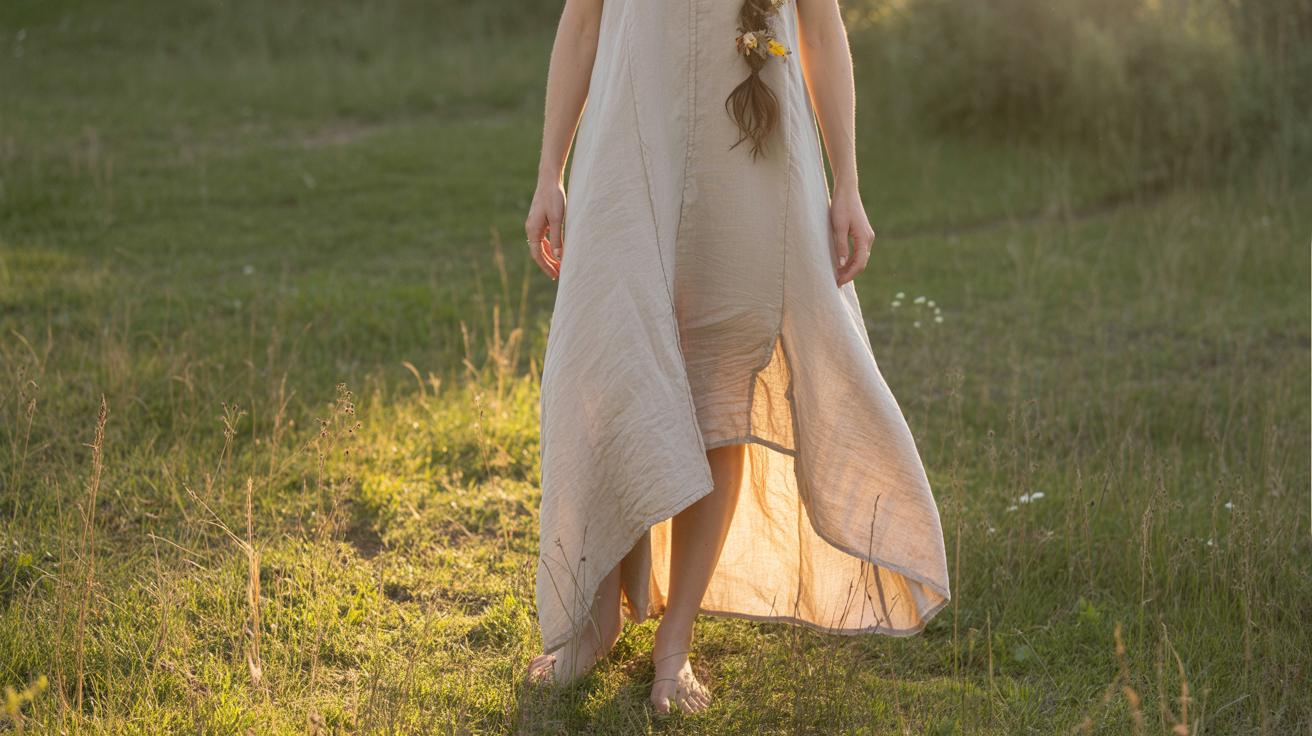
The ethereal wedding dress — flowing, layered, seemingly weightless — is almost impossible to achieve authentically in polyester. The way muslin or gauze cotton catches afternoon light, the way it lifts in a field breeze, requires the specific weight and texture of a natural fiber. Similarly, the increasingly sought-after witchy wedding dress or witch wedding dress aesthetic — dark florals, asymmetric cuts, rich earthy tones, a sense of ritual and depth — is rooted in natural fabric. The drape of a deep-toned linen, the slight crinkle of an unwashed cotton, the layered texture of a wool-blend skirt: these are the building blocks of that look.
Indie wedding dresses occupy a related space. They resist the conventions of bridal industry formality — the stiff boning, the synthetic duchess satin, the cathedral train — in favor of something more personal, more wearable, and more honest. Natural fabric is almost definitionally indie in the bridal context, because it refuses the performance of luxury in favor of the reality of it.
Dip hem dresses for weddings — those asymmetric hems that fall longer at the back or sides — are particularly well-suited to natural fabrics. The drape of linen or cotton allows the hem to move and fall in a way that structured synthetics cannot. Layered dresses for weddings, built from multiple weights of cotton or muslin, create depth and movement that reads as effortlessly considered rather than overdone.
Dresses for a Farm Wedding or Outdoor Ceremony
The setting of a wedding shapes everything about what to wear. A formal hotel ballroom has different demands than a wildflower meadow, a converted barn, or a coastal cliff. If you are looking for dresses for a farm wedding — or any ceremony held on land, in a garden, or under open sky — natural fabric is not just aesthetically appropriate. It is the practical choice.
Linen and cotton handle the unpredictability of outdoor settings with grace. They do not generate static. They do not trap heat against the body on a warm September afternoon. They do not look incongruous against a backdrop of wheat fields, old stone walls, or ancient oak trees. A dress made from natural cloth belongs in a landscape in a way that synthetic fabric simply does not.
For those searching for dresses for a wedding in September specifically, this is worth thinking through carefully. Early autumn weddings often move between warm afternoons and cool evenings. Linen and cotton breathe well enough for the midday sun, and a linen dress can be layered with a light wool or cotton wrap as the temperature drops after sunset. The same dress carries you through the whole day without requiring a costume change.
Dresses for a farm wedding also benefit from being genuinely washable. Many natural fabric garments — particularly those made from pre-washed linen or cotton — can be laundered at home. After a day that may involve a walk through a meadow, dancing on a stone floor, or sitting on a hay bale, that matters.
What to Wear as a Wedding Guest: Reading the Room Without Losing Yourself
If you are a guest rather than the person getting married, the question of what to dress for a wedding is shaped by a different set of considerations. You want to honor the occasion without overshadowing the couple. You want to look intentional without looking like you tried too hard. And increasingly, guests are asking whether they can wear something they will actually wear again — something that justifies its place in a wardrobe beyond a single afternoon.
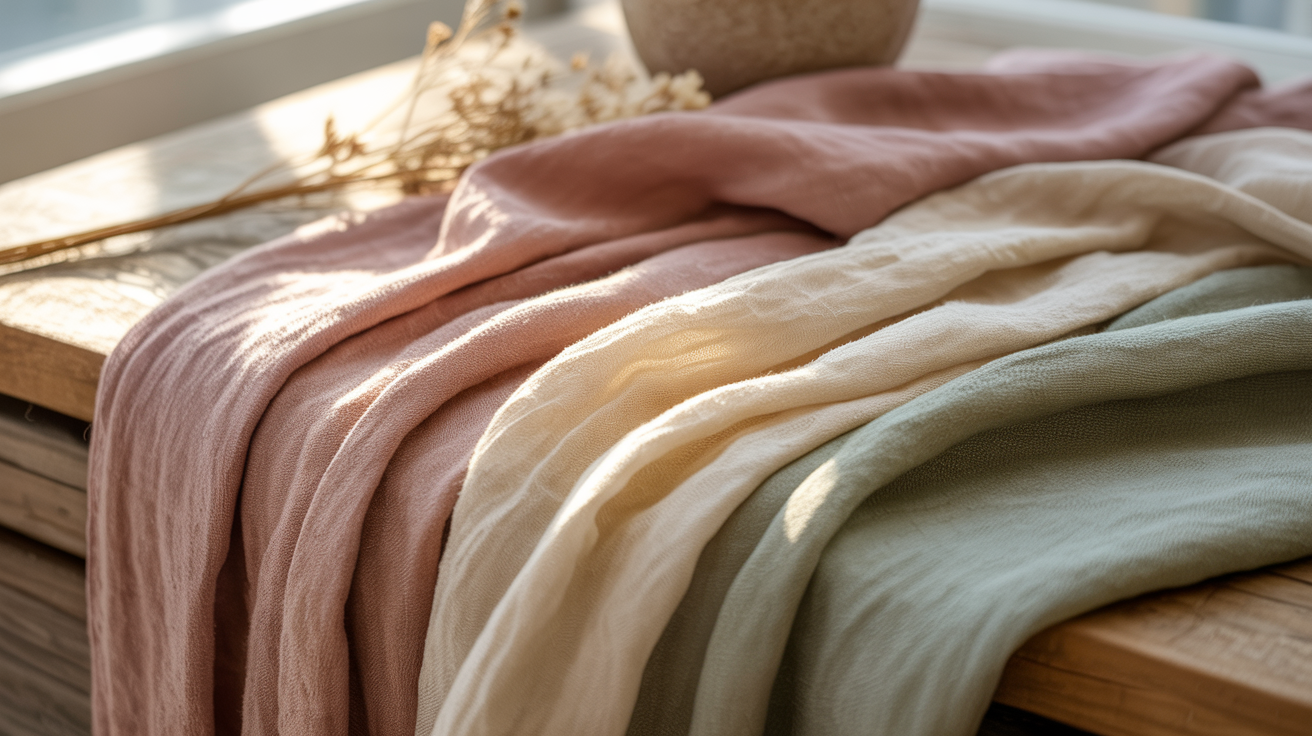
Natural fabric dresses answer all of these questions well. A well-cut linen dress in a muted earth tone — dusty rose, warm terracotta, sage, natural undyed cream — reads as considered and respectful without being formal in a way that feels borrowed from another era. A layered cotton or muslin dress with a dip hem has enough visual interest to feel celebratory without competing with anyone.
The question of a dress for a wedding guest is also a question of longevity. A linen dress worn to a June wedding can be worn again in August. A cotton dress that looked right at a September ceremony will look equally right at a winter market or a dinner in November with a heavier layer underneath. Natural fabric dresses do not expire with the season or the occasion. They accumulate meaning and softness over time.
If you are actively looking for a dress for a wedding and feeling overwhelmed by the volume of synthetic options in most retail environments, it may help to narrow your search deliberately toward natural fiber brands. Explore our collection of boho dresses women for pieces designed with exactly this kind of occasion in mind — garments that are beautiful, breathable, and built to last beyond a single day.
The Witchy and the Ethereal: Two Ends of the Natural Fabric Spectrum
It is worth spending a moment on two aesthetics that have moved from niche to genuinely influential in the way people think about dresses for weddings: the ethereal and the witchy. They appear to be opposites — one light, one dark; one airy, one grounded — but they share a common foundation in natural textile and a rejection of conventional bridal formality.
The ethereal wedding dress is typically pale or undyed: cream linen, white cotton gauze, ivory muslin. It layers. It floats. It photographs beautifully in natural light because the fabric itself has a luminosity that synthetic white does not. It suits outdoor ceremonies, morning weddings, garden settings, and anyone who wants to feel like they are wearing something ancient and new at the same time.
The witchy wedding dress or witch wedding dress — terms that have gained real traction in bridal communities — tends toward deeper tones: forest green, burgundy, near-black, deep plum, rust. It often incorporates asymmetry, layering, and unexpected texture. It suits autumn and winter ceremonies, evening receptions, and anyone who has never wanted to wear white to a wedding and has finally found permission not to. In both cases, natural fabric is what makes the aesthetic work. The drape, the texture, the way the cloth moves: these cannot be faked.
For couples looking to dress the entire wedding party in a coherent natural-fabric aesthetic — including the men — it is worth noting that the same philosophy applies across garments. Our Boho Pants for Men offer a grounded, natural-fabric option that sits beautifully alongside linen and cotton dresses without requiring anyone to wear a conventional suit.
Caring for Natural Fabric on and After the Day
One of the most common hesitations people have about natural fabric dresses for weddings is care. Linen wrinkles. Cotton can shrink. Muslin feels delicate. These concerns are understandable, but they are also largely manageable with a small amount of knowledge.
Linen wrinkles, yes — but the wrinkles that develop through wear are not the same as the sharp creases of a poorly stored garment. Linen that has been worn and moved in has a relaxed, lived-in texture that reads as intentional rather than careless. Many people who wear linen to weddings find that the slight softening of the fabric over the course of the day actually improves how it looks by evening.
Pre-washed linen and cotton — which is how most thoughtfully made natural fabric garments are produced — have already gone through the shrinkage process before they reach you. They can be washed at home, dried flat or hung, and stored without special treatment. Compare this to a dry-clean-only synthetic gown that will spend the rest of its life in a box, and the practical case for natural fabric becomes clear.
A natural fabric dress worn at a wedding is a garment you can continue to wear, wash, lend, alter, and eventually pass on. It participates in a different economy of clothing — one based on use and meaning rather than display and disposal.
FAQ
Can I wear a linen dress to a formal wedding?
Yes. The formality of a linen dress depends entirely on its cut, color, and styling rather than the fabric itself. A well-tailored linen dress in a deep or neutral tone, worn with considered accessories, reads as elegant and intentional at most formal occasions. Linen has centuries of association with ceremony and ritual — it is not an informal fabric by nature.
What are the best natural fabrics for dresses for a wedding in September?
Linen and cotton are ideal for early autumn weddings because they breathe well in residual warmth while layering easily as the evening cools. A mid-weight linen dress paired with a light wool or cotton wrap covers most September temperature ranges comfortably.
Are natural fabric dresses appropriate for dresses for a farm wedding?
Natural fabric dresses are arguably the most appropriate choice for farm weddings and outdoor ceremonies. They move well on uneven terrain, do not generate static, handle temperature variation better than synthetics, and look visually at home in a natural landscape in a way that structured or synthetic garments rarely do.
How do I style a witchy wedding dress without it looking like a costume?
The key is in the fabric and the fit. A witch wedding dress or witchy wedding dress that is made from a quality natural textile — deep-toned linen, textured cotton, layered muslin — has enough inherent richness that it does not need theatrical accessories to read as intentional. Keep styling grounded: simple jewelry, natural materials, nothing that competes with the garment itself.
Can men also dress in natural fabrics for a wedding?
Absolutely. Linen shirts, cotton trousers, and natural-fiber accessories allow men to participate in a coherent natural-fabric aesthetic without wearing a conventional suit. This works particularly well for outdoor, farm, or boho-style weddings where the overall visual language is relaxed and earth-connected.
A Closing Thought
A wedding is one of the few occasions in contemporary life that still carries the weight of ritual. The clothes worn on that day are not simply outfits — they are part of how the occasion is held and remembered. Choosing natural fabric for a wedding dress, whether you are the one being married or someone there to witness it, is a way of honoring that weight. It is a choice that connects the day to something slower, older, and more considered than the fashion industry's usual offerings.
At Lariko Studio, every piece we make is cut from natural cloth — linen, cotton, muslin, wool — and designed to be worn on days that matter and on ordinary days that become meaningful through use. If you are looking for a dress for a wedding, or building a wardrobe around the values of slow fashion and natural textile, we invite you to explore our full collection of boho dresses women and find something that will carry you through the day with ease, beauty, and intention.