

Slow Cloth, Sacred Day: Choosing Natural Fabric for a Wedding
Slow Cloth, Sacred Day: Choosing Natural Fabric for a Wedding
A wedding is one of the few days in life when what you wear carries genuine weight. Not because of trend cycles or dress codes, but because the garment becomes part of the memory — woven into photographs, into the texture of the day itself. If you are looking for a dress for a wedding and find yourself drawn away from synthetic sheens and structured silhouettes, you are not alone. More and more people are choosing natural fabrics: linen that softens in the breeze, cotton muslin that moves like water, undyed wool that holds warmth without heaviness. This guide is for anyone dressing for a wedding — as a guest, a bride, or simply someone who wants to feel at home in their own skin on a significant day. We will walk through fabric choices, silhouettes, seasonal considerations, and the quiet philosophy behind choosing slow cloth for a sacred occasion.
Why Natural Fabric Belongs at a Wedding
There is something quietly radical about wearing linen or cotton to a wedding in an era of polyester charmeuse and heavily structured gowns. Natural fabrics breathe. They respond to the body and the environment rather than resisting them. On a long day that moves from a morning ceremony to an evening reception, that responsiveness matters more than most people expect.
Natural fibres regulate temperature in a way synthetic materials simply cannot. Linen wicks moisture and releases it. Cotton muslin layers without trapping heat. Undyed wool — even in lighter weights — insulates gently without creating discomfort during hours of wear. For a farm wedding, an outdoor ceremony in September, or a long summer celebration, this is not a small consideration.
Beyond comfort, natural fabrics carry a visual quality that photographs beautifully in soft light. The slight texture of linen, the gentle drape of washed cotton — these read as warmth and authenticity in images rather than the flat, reflective surface of synthetic alternatives. If you are looking for a dress for a wedding that will feel as good in ten years of photographs as it does on the day, natural cloth is a strong foundation.
There is also an ethical dimension worth naming plainly. Choosing a garment made from natural, responsibly sourced fabric — one that will not shed microplastics and that will biodegrade at the end of its life — is a meaningful choice on a day that is often framed around values and commitment.
Silhouettes That Work: From Ethereal to Earthy
When people think about an ethereal wedding dress, they often picture layers of tulle or silk organza. But linen and cotton muslin can achieve the same quality of lightness through different means — through loose weave, through layering, through cut. The result is something that feels grounded rather than constructed, which suits many people far better.
A few silhouettes worth considering when choosing dresses for a wedding in natural fabrics:
- Layered and tiered cuts — layered dresses for weddings work particularly well in cotton muslin and gauze. Multiple tiers of lightweight fabric create movement and volume without weight, and the slight transparency of each layer adds depth.
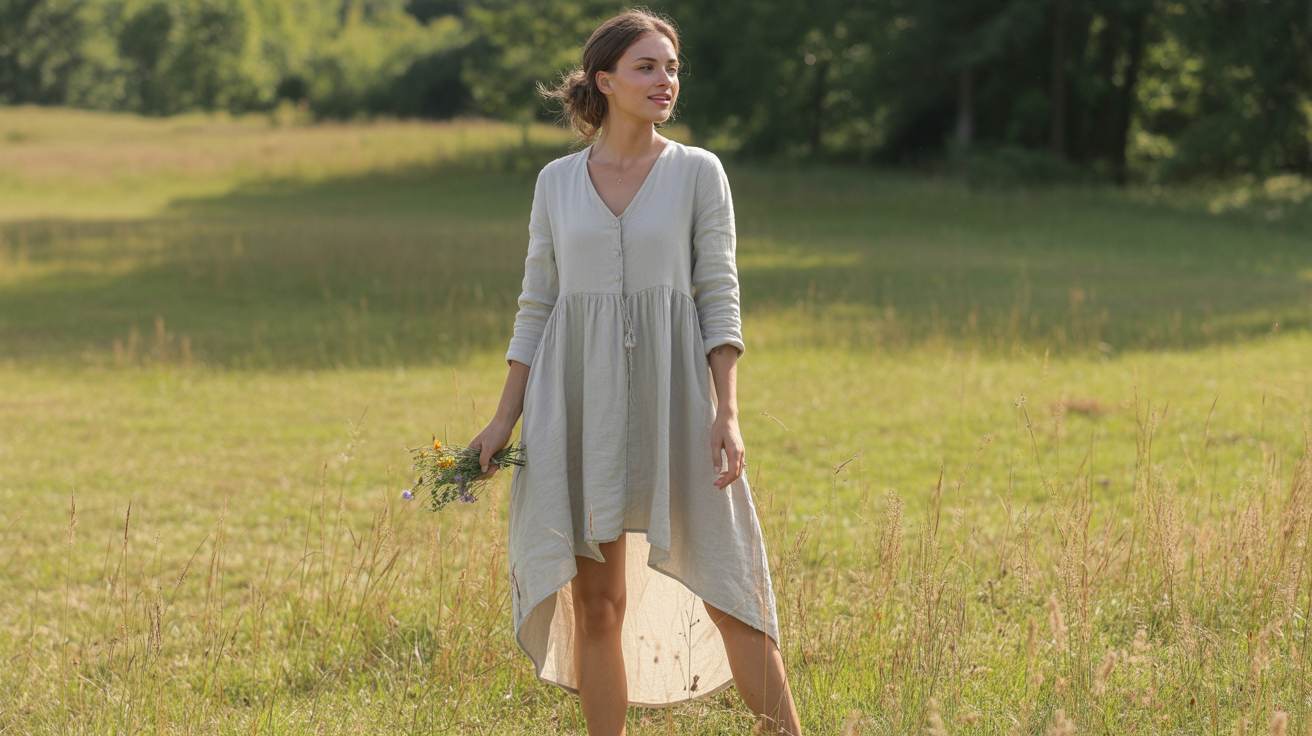
- Dip hem dresses for weddings — an asymmetric or handkerchief hem in linen creates an organic, unhurried silhouette. The uneven line echoes natural forms and suits outdoor settings especially well.
- Loose column shapes — a simple, long column cut in washed linen reads as both minimal and deeply considered. It works for the bride who wants nothing between herself and the day.
- Wrap and crossover styles — adjustable, forgiving, and easy to move in. Particularly useful for a dress on wedding day that needs to carry through dancing, sitting on grass, or navigating a woodland path.
For those drawn to something darker and more atmospheric — what might be called a witch wedding dress or witchy wedding dress aesthetic — natural fabrics serve this vision well too. Deep-dyed linen in charcoal, forest green, or aubergine, combined with layered textures and organic silhouettes, creates something genuinely striking without relying on synthetic theatrical fabrics. The witchy wedding dress aesthetic is less about costume and more about a relationship with the natural world, which makes slow cloth an entirely coherent choice.
Dressing for a September Wedding: Fabric and Layering
September occupies a particular place in the wedding calendar. The light is golden and low, the air holds warmth through the afternoon but cools sharply by evening, and the landscape is beginning its slow turn. Dresses for a wedding in September need to work across that range of conditions, which is where layering in natural fabrics becomes genuinely practical.
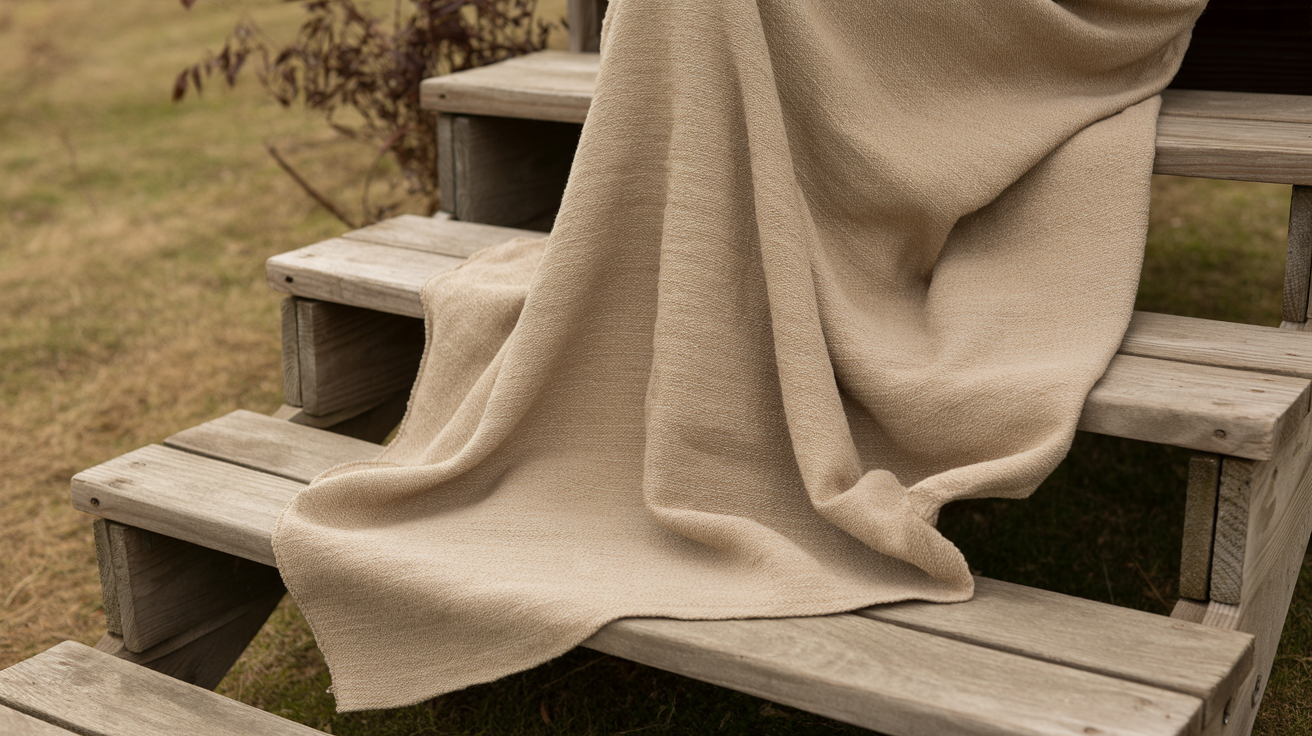
A linen dress worn with a fine cotton or wool wrap can move through the temperature shifts of a September day without requiring a change of outfit. The wrap becomes part of the look rather than an afterthought — especially in earthy tones that echo the season: warm terracotta, dusty sage, oat, or deep rust.
For a dress for weddings in transitional seasons, consider weight carefully. Mid-weight linen — not the heavy suiting variety, but not the sheerest gauze either — is the most versatile option. It holds its shape in a breeze, does not cling when warm, and layers comfortably. Washed linen, which has been processed to soften the fibre, is particularly forgiving and arrives already broken in, which means it moves naturally from the first hour of wear.
If you are dressing for a farm wedding or a celebration held outdoors, also consider hem length and footwear compatibility. A dress in wedding settings that involve uneven ground, grass, or gravel paths works better at midi or tea length than full floor-length, unless you are comfortable managing the fabric consciously throughout the day.
Indie Wedding Dresses and the Slow Fashion Approach
The category of indie wedding dresses has expanded significantly as more people look outside the conventional bridal industry for their wedding with dress choices. Independent designers and small studios working in natural fabrics offer something the mainstream market rarely does: genuine craft, considered construction, and garments made by people who understand the material they are working with.
What distinguishes a slow fashion approach to dresses for weddings is not simply the fabric choice but the entire process. Garments are made in smaller quantities, often to order or in limited runs. The construction is intended to last — not just for the day, but for years of subsequent wear. This matters both ethically and practically. A dress for a wedding that can also be worn to a midsummer gathering, a harvest dinner, or a quiet evening at home represents a genuinely different relationship with clothing than a garment purchased for a single occasion and stored indefinitely afterward.
Slow fashion bridal wear tends to favour natural dye, undyed cloth, or minimal processing — which means the garment ages gracefully rather than degrading in the way synthetic fabrics do. Linen softens with each wash. Cotton develops a gentle patina. These qualities make the garment more itself over time, which feels appropriate for something worn on a day you intend to remember.
At Lariko Studio, this philosophy extends across the entire collection. Those who want to coordinate a full look might explore Boho Blouses Women — pieces in natural cotton and linen that layer beautifully with flowing skirts or trousers, and that carry the same unhurried quality as a considered bridal garment. For partners or guests who prefer trousers, Boho Pants for Men in natural fabrics offer a coherent alternative to conventional wedding attire.
What to Wear as a Wedding Guest: Navigating the Dress Code in Natural Fabric
If you are looking for a dress for a wedding as a guest rather than a bride, the considerations shift slightly. You are working within someone else's vision for the day while remaining true to your own sense of dress. Natural fabrics navigate this well because they read as considered and respectful without requiring you to conform to a conventional aesthetic.
A few principles for what to dress for wedding occasions as a guest in slow fashion pieces:
- Read the setting before the dress code. A farm wedding, a woodland ceremony, or a festival-style celebration will welcome linen and cotton in earthy tones far more naturally than a formal urban reception — though even formal settings are becoming more open to considered alternatives.
- Colour matters more than formality. A deep-dyed linen dress in a rich tone reads as dressed-up regardless of the fabric. Pale, undyed linen reads as relaxed and summery. Both are appropriate in the right context.
- Layering adds occasion. A simple dress becomes more formal with a structured linen jacket or a fine wool wrap. Adding these elements in complementary natural tones creates a cohesive look that feels deliberate.
- Consider a dress for a wedding that you genuinely want to wear again. The best guest outfit is one that earns its place in your wardrobe long after the day.
Dip hem dresses for weddings are a particularly versatile guest option. The asymmetric hem creates visual interest without requiring accessories to carry the look, and it works across a range of settings from outdoor ceremonies to relaxed evening receptions.
Caring for Natural Fabric After the Wedding
A dress in wedding contexts is often treated as a once-worn object, particularly in the conventional bridal market. One of the genuine advantages of choosing natural fabric is that the garment does not need to be preserved in a box — it can be washed, worn, and lived in.
Linen and cotton wash well in cool water with a gentle detergent. Line drying preserves the fibre and allows the fabric to return to its natural shape. Linen in particular benefits from being ironed slightly damp, which restores its characteristic clean surface. Muslin and gauze cotton should be handled gently when wet, as the fibres are more delicate, but they dry quickly and rarely require ironing.
The longevity of a natural fabric garment is one of its most underrated qualities. A well-made linen dress worn on a wedding day can realistically be worn for decades with appropriate care — softening and deepening in character with each wash. This is the slow fashion promise made tangible: a garment that becomes more itself over time rather than degrading toward obsolescence.
FAQ
Can linen really work as a dress for a wedding, or does it look too casual?
Linen works very well as a dress for a wedding when the cut, colour, and styling are considered carefully. Washed linen in a deep tone, a structured silhouette, or a layered design reads as deliberate and elegant. The fabric's slight texture is a feature rather than a flaw — it creates visual depth that many synthetic fabrics lack.
What is the best natural fabric for dresses for a wedding in warm weather?
Cotton muslin and lightweight linen are both excellent choices for warm weather. They breathe well, wick moisture, and do not cling. For very warm conditions, a single layer of fine cotton gauze is particularly comfortable. Avoid heavy linen weights, which can feel stiff and warm in high temperatures.
Are witchy wedding dresses appropriate for a conventional ceremony?
The witchy wedding dress aesthetic — characterised by dark tones, organic silhouettes, and natural textures — is increasingly present at a wide range of weddings. Whether it is appropriate depends entirely on the couple's vision for the day. For outdoor, boho, or festival-style celebrations, this aesthetic fits naturally. For very traditional or formal ceremonies, it may be worth a conversation with the couple first.
How do I style layered dresses for weddings as a guest without overdoing it?
Keep accessories minimal when wearing layered dresses for weddings. The movement and texture of a layered garment carry the look on their own. Simple leather sandals or low heels, a single piece of jewellery, and a natural fabric wrap if the evening is cool are usually sufficient. Let the garment do the work.
What should I look for when dressing for a farm wedding specifically?
For a farm wedding, prioritise comfort and practicality alongside aesthetics. Consider hem length — midi or tea length is easier to manage on uneven ground than floor-length. Choose footwear you can walk in across grass or gravel. Natural fabrics in earthy tones suit the setting beautifully and feel coherent with the landscape rather than at odds with it.
Finding Your Dress at Lariko Studio
Whether you are the bride, a guest, or simply someone who wants to dress well on a meaningful day, the decision to choose natural fabric is a quiet but significant one. It says something about how you relate to your own body, to the environment, and to the idea of clothing as something more than a temporary surface. Slow cloth on a sacred day is not a compromise — it is a considered choice that tends to feel more right the longer the day goes on.
Lariko Studio works with linen, cotton, muslin, and wool to create garments that carry this philosophy in their construction. Explore the full collection to find pieces that suit your vision for the day — whether you are looking for a flowing dress, a layered skirt, or separates that allow you to build your own look from honest materials.