

The Art of Effortless Layering: Styling Your Boho Dress for Ever
The Art of Effortless Layering: Styling Your Boho Dress for Ever
Knowing how to wear a boho dress well is less about following rules and more about understanding proportion, texture, and the quiet confidence that comes from dressing intentionally. A boho dress — particularly one cut from natural linen, cotton, or muslin — is one of the most adaptable garments in a considered wardrobe. It moves with the body, breathes in heat, and layers beautifully against the cold. Whether you are heading to a weekend market, a coastal ceremony, or simply moving through an ordinary Tuesday with more grace than usual, the way you build around a boho dress determines everything. This guide walks through the principles of effortless layering across all four seasons, with attention to fabric behaviour, colour relationships, and the kind of styling choices that feel cohesive rather than constructed. The goal is not a perfect outfit. The goal is a way of dressing that feels like yourself.
Understanding the Boho Dress as a Layering Foundation
Before thinking about what goes over or under a boho dress, it helps to think about the dress itself. Boho dresses are typically cut with generous volume — wide sleeves, flowing skirts, relaxed bodices. This volume is not excess; it is the architectural space that makes layering possible without bulk. A fitted blazer over a voluminous linen dress creates tension that reads as intentional. A denim jacket over the same dress reads as casual and grounded. The dress provides the base; everything else is conversation.
Natural fabrics behave differently from synthetic ones, and this matters enormously when layering. Linen, cotton, and muslin drape rather than cling, which means they accept additional layers without distorting. A linen dress worn under a lightweight wool cardigan does not bunch or pull. It settles. This is one of the reasons Lariko Studio works exclusively with natural materials — not as a marketing position, but because natural fabrics are simply better tools for building a layered wardrobe that functions across seasons.
Pay attention also to the neckline and sleeve length of your boho dress. A wide, off-shoulder neckline invites a fitted turtleneck underneath in colder months. A long-sleeved dress may not need anything beneath it but can carry a structured vest or waistcoat over the top. Understanding the geometry of the dress you own is the first step toward layering it well.
Spring Layering: Light Fabrics, Considered Transitions
Spring is the season of uncertainty — warm afternoons that arrive without warning, cool mornings that linger longer than expected. A boho dress in a lightweight cotton or muslin is exactly right for this kind of weather, provided you know how to build around it for temperature shifts throughout the day.
Begin with the dress alone and add a long linen shirt — left open, sleeves rolled — as a soft outer layer. This works particularly well with dresses in earthy neutrals: sand, clay, sage, undyed white. The linen shirt adds coverage without weight and can be tied at the waist or left loose depending on how structured you want the silhouette to feel.
For footwear in spring, leather sandals or ankle boots bridge the seasonal gap well. Ankle boots ground a flowing dress and add a slight visual weight at the hem that balances volume above. This combination — boho dress, open linen shirt, ankle boots — is one of the most reliable spring formulas in a slow fashion wardrobe.
Spring is also when many people begin thinking about occasion dressing. A boho dress in a delicate floral cotton print is a natural choice as one of the dresses to wear to a wedding as a guest in the early months of the year. Layer it with a fine-knit cardigan for a morning ceremony, remove the cardigan for the reception, and the dress carries the occasion across several hours without effort.
Summer Styling: When the Dress Stands Alone
In high summer, the layering question shifts. The goal becomes not warmth but proportion and occasion. A boho dress worn in July needs very little added to it — the work is in the accessories, the footwear, and the way the dress itself is chosen for the context.
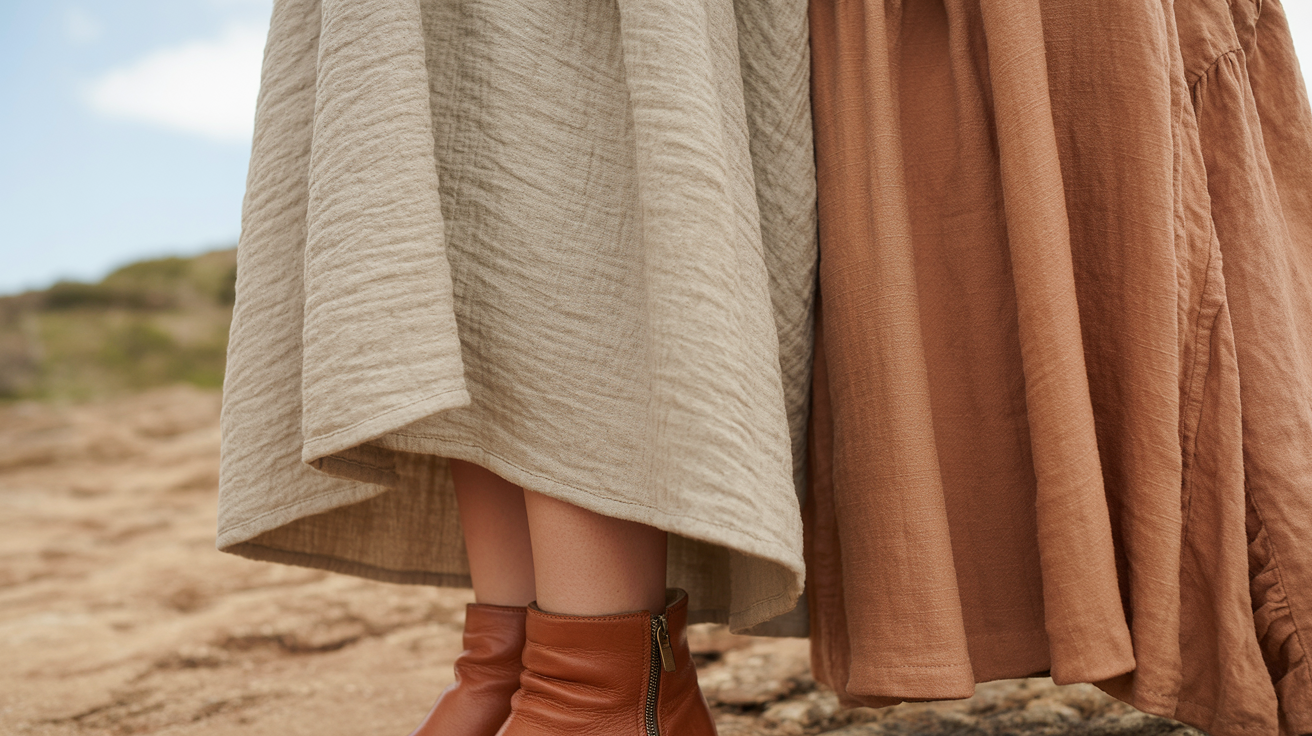
For everyday warm-weather wear, a loose muslin dress with minimal embellishment is the most comfortable option. Muslin is lighter than standard cotton and moves with remarkable ease in heat. Pair it with flat leather sandals, a woven bag, and minimal jewellery. This is dressing that does not ask for attention but holds it anyway.
For summer occasions, the boho dress becomes a particularly strong choice. If you are considering dresses to wear to a summer wedding, a linen dress in a muted floral or geometric print strikes the right balance between festive and understated. For outdoor or coastal ceremonies — where guests often need guidance on what dress to wear to a beach wedding — a flowing cotton or linen dress in a natural palette is both appropriate and practical. It handles sea breezes, uneven ground, and extended standing far better than structured formalwear.
When thinking about dresses to wear at a beach wedding, prioritise fabric weight. Lightweight linen or cotton gauze moves beautifully in coastal air and does not trap heat. Avoid heavily embellished fabrics that catch wind awkwardly or synthetic materials that retain warmth. A simple, well-cut boho dress in a natural fibre is consistently the right answer for dresses to wear for a beach wedding, regardless of how formal the event is intended to be.
Summer is also the season for festival dressing, which shares significant DNA with boho style. If your partner or companion is considering what to wear alongside you, Festival Shorts for Men in natural linen pair well with a boho dress without creating a mismatched aesthetic — both garments share the same design language of ease, natural fabric, and considered simplicity.
Autumn Layering: Building Depth and Warmth
Autumn is where layering becomes genuinely interesting. The temperature drop gives you permission to add more — and the visual richness of autumn colour makes it easier to build combinations that feel complex without looking chaotic.
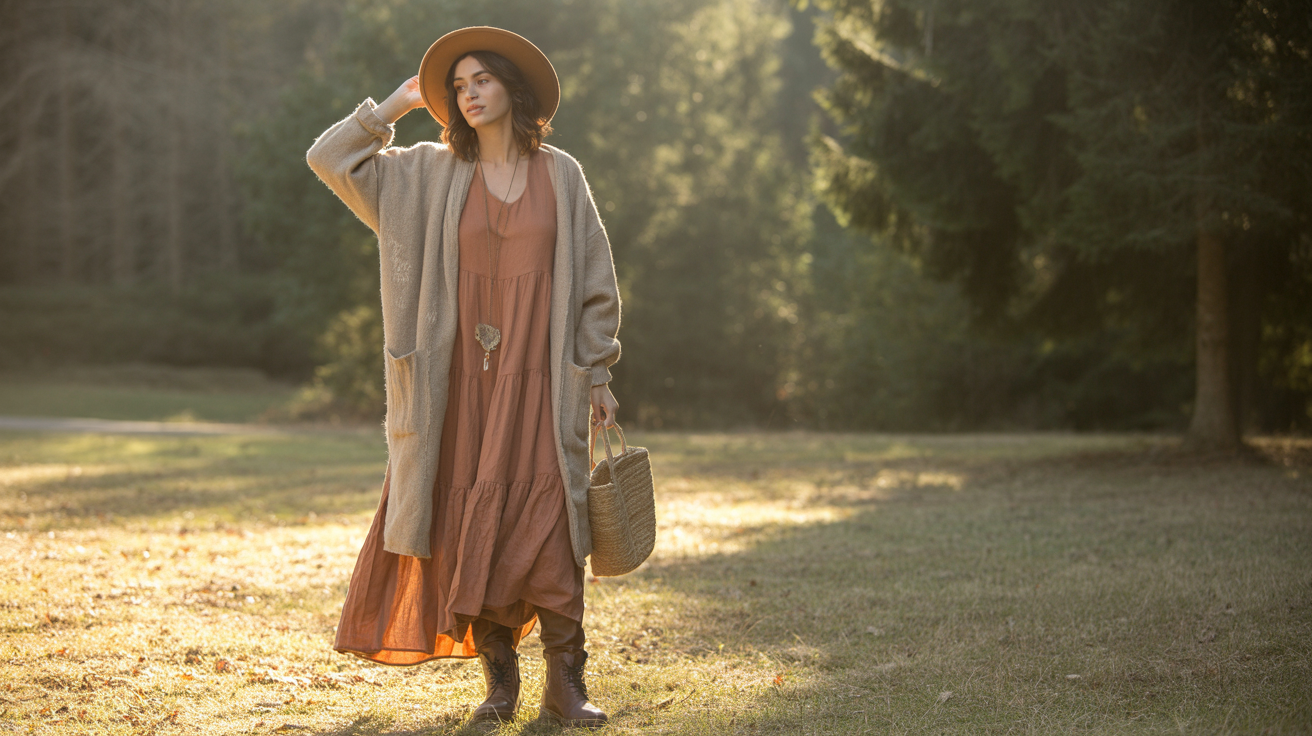
A boho dress in a deeper autumn tone — rust, terracotta, deep olive, warm burgundy — works as the centrepiece of a layered autumn look. Over it, a chunky knit cardigan in an undyed natural wool adds both warmth and texture. The contrast between the flowing fabric of the dress and the structured weight of the wool creates the kind of visual depth that makes a layered look feel intentional rather than assembled from whatever was available.
Beneath the dress, consider a fine cotton turtleneck or a long-sleeved thermal top. This extends the wearable season of a summer boho dress significantly. The turtleneck peeks above the neckline of the dress and creates a layered effect at the collar that is both practical and visually considered. With tall leather boots or chunky-soled ankle boots, this combination is complete.
Autumn is also a peak season for weddings, and the question of what dress to wear for a wedding as a guest becomes more complex when the weather is cooler. A boho dress in a heavier linen or a cotton-wool blend, layered with a structured blazer or a long velvet coat, makes for an excellent wedding guest outfit that handles both ceremony and outdoor photography without requiring a separate coat check. For men attending the same event, 3/4 Length Pants for Men in a heavier linen work as a transitional autumn option that maintains the relaxed aesthetic of the occasion.
When building an autumn layered look, pay attention to the weight distribution of your layers. The heaviest layer should sit outermost. The lightest layer should sit closest to the body. This is not just about warmth — it is about how the garments fall and move together.
Winter Wearing: The Boho Dress Reimagined
Wearing a boho dress in winter requires the most deliberate layering, but it also produces some of the most interesting results. The key principle is treating the dress as a skirt — a long, flowing skirt with a built-in bodice — and dressing the upper body accordingly.
A fitted turtleneck sweater worn beneath a boho dress transforms the garment entirely. The dress becomes a layering piece rather than the primary garment, and the sweater becomes the visual anchor. Add a heavy wool coat over everything, and the look is genuinely winter-appropriate without sacrificing the essential character of the dress.
Footwear in winter should be substantial. Knee-high leather boots worn with a boho dress create a strong vertical line that balances the horizontal volume of the skirt. Thick-soled boots add visual weight at the base of the outfit that grounds the entire look. Avoid delicate footwear in winter — it reads as unfinished against the heaviness of winter layering.
Accessories take on greater importance in winter layering. A wide-brimmed felt hat, a long wool scarf, or a leather belt worn at the waist to define the silhouette beneath a coat — these details do the work that fabric alone cannot do in colder months. They signal intentionality and give the eye somewhere to rest in an otherwise voluminous combination of layers.
Occasion Dressing: The Boho Dress at Weddings and Celebrations
One of the most common questions around boho dressing is how to navigate formal occasions without abandoning the aesthetic. The answer lies in fabric quality, colour choice, and restraint in styling.
For those searching for dresses to wear on a wedding occasion, the boho dress offers a genuine alternative to conventional formalwear. A well-cut linen dress in a rich jewel tone or a carefully chosen floral print is entirely appropriate as wedding wear. The distinction between appropriate and inappropriate boho dressing at weddings is almost always fabric quality and fit — a well-made linen dress reads as intentional and considered; a poorly made synthetic dress in a boho silhouette does not.
When choosing a dress to wear in a wedding context — whether as a guest, a bridesmaid, or a participant in a less formal ceremony — consider the setting first. For outdoor summer weddings, dresses to wear to the wedding in natural linen or cotton are the most practical and visually appropriate choice. For indoor autumn or winter weddings, a boho dress in a heavier fabric, layered with a structured jacket or coat, works equally well.
The question of what dress to wear to a wedding ultimately comes down to reading the event correctly and choosing a garment that honours the occasion without abandoning your own aesthetic. A boho dress from a slow fashion brand — made from natural fabric, cut with care, designed to last — does this consistently well across a range of wedding contexts, from intimate garden ceremonies to larger formal celebrations.
For beach wedding settings specifically, dresses to wear as a wedding guest should prioritise ease of movement, breathability, and resistance to wind. A flowing cotton or linen boho dress ticks all three criteria. It is one of the most honest answers to the recurring question of dresses to wear for a summer wedding in a coastal or outdoor setting.
FAQ
How do I wear a boho dress in cold weather without losing the look?
Layer a fitted turtleneck sweater beneath the dress, add a heavy wool cardigan or structured coat over it, and choose substantial footwear such as knee-high leather boots. The dress functions as a long skirt in this configuration, and the look retains its character while providing genuine warmth.
What fabrics work best for a boho dress across seasons?
Linen is the most versatile — it breathes in summer and accepts layers in cooler months. Muslin and lightweight cotton are ideal for high summer. A cotton-wool blend or heavier linen weight works well for autumn and winter boho dressing. Natural fabrics consistently outperform synthetic alternatives in layered looks because they drape rather than cling.
Is a boho dress appropriate as a wedding guest outfit?
Yes, when chosen carefully. A well-made linen or cotton boho dress in an appropriate colour — avoiding white or ivory — is a thoughtful and elegant choice as a wedding guest outfit. The key factors are fabric quality, the formality of the event, and whether the dress is styled with care. For beach weddings in particular, a flowing natural-fabric boho dress is one of the most practical and visually appropriate options available.
How do I style a boho dress for a summer festival?
Keep the dress as the centrepiece and build around it simply. Flat sandals or ankle boots, a woven or leather bag, and minimal jewellery are enough. An open linen shirt worn over the dress adds a layer of coverage and visual interest without weight. Avoid over-accessorising — the dress should carry the look.
What is the most important principle in layering a boho dress?
Proportion. The volume of a boho dress means that additional layers need to either contrast with that volume — a fitted turtleneck, a structured blazer — or complement it through similar ease, such as an open linen shirt. Layering like with like, without attention to proportion, tends to produce looks that feel shapeless rather than intentional.
A Closing Thought
Learning how to wear a boho dress well is a slow process, and that slowness is part of the point. It asks you to pay attention to fabric, to season, to occasion, and to the specific garments you own rather than the ones you imagine owning. A single well-made linen boho dress, layered thoughtfully across four seasons, is worth more than a wardrobe of garments worn once and forgotten.
At Lariko Studio, every dress is made from natural fabric, cut to move with the body, and designed to be worn across years rather than seasons. If you are building a wardrobe around this kind of thinking, explore the Lariko Studio collections — and find the pieces that will layer with everything you already love.