

Maxi Dresses for Women: The Guide to Finding Your Fit
Maxi Dresses for Women: The Guide to Finding Your Fit
Few garments have the quiet versatility of a well-chosen maxi dress. Whether you are dressing for a summer wedding, a coastal holiday, or simply want something comfortable and considered for everyday life, maxi dresses for women offer a length and silhouette that works across seasons, occasions, and body types. The challenge is not finding one — the market is full of them — but finding the right one: the cut that flatters your proportions, the fabric that breathes and ages well, the design that reflects something genuine about how you want to move through the world. This guide covers all of that. We look at how to match a maxi dress to your body shape, how to choose one for a wedding, what fabrics are worth investing in, and how the boho aesthetic translates into something wearable and lasting rather than purely trend-driven. If you have been searching for clarity rather than more options, this is a good place to start.
Understanding the Maxi Silhouette: Length, Cut, and Proportion
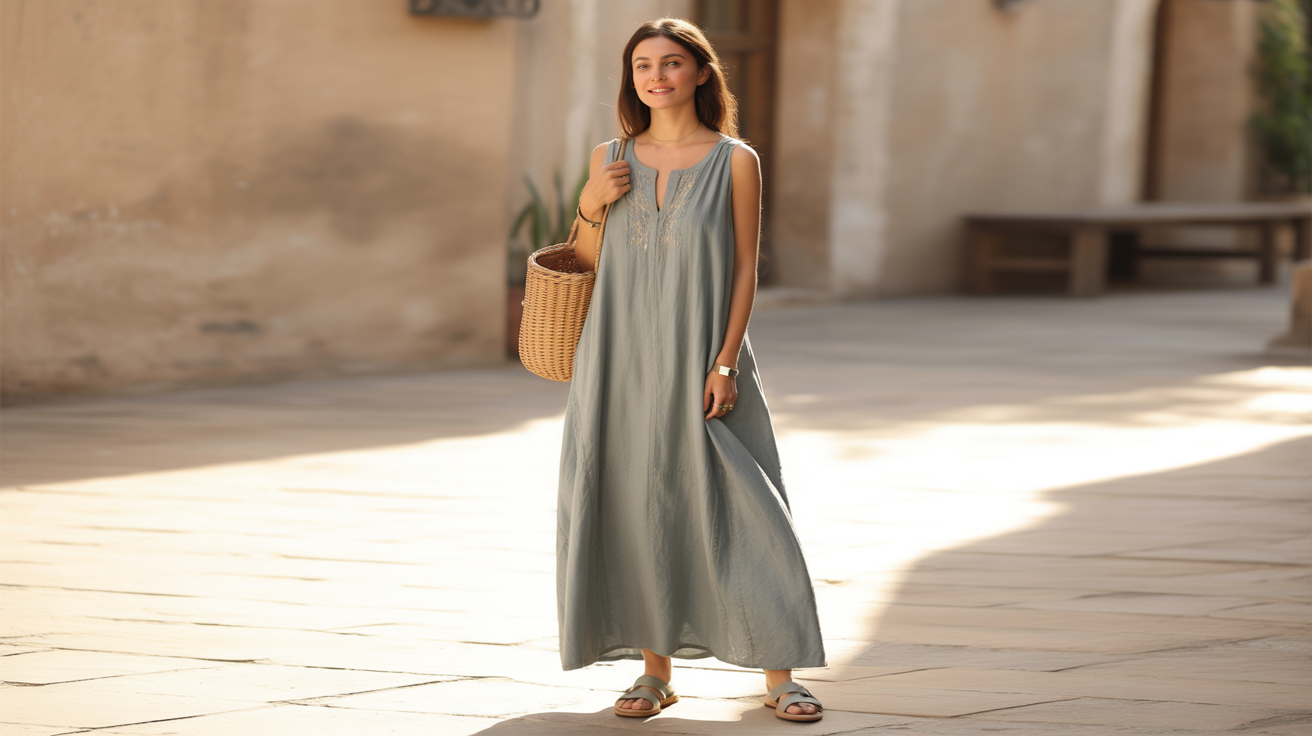
The maxi dress is defined by its floor-grazing or ankle-length hemline, but within that definition there is enormous variation. A-line cuts flare gently from the waist and work well for most body shapes. Empire waists sit just below the bust and create a long, uninterrupted line through the body — particularly comfortable during warmer months and flattering on women who prefer less emphasis on the waist. Wrap-style maxis allow for adjustable fit and tend to suit a wide range of proportions because the wearer controls where the waistline falls. Slip-style maxis, cut straight from shoulder to hem, suit lean and athletic builds and pair well with a linen overshirt or structured belt.
Proportion is the most important factor when choosing a maxi dress women of any style can feel confident wearing. A common mistake is choosing a dress based on how it looks on a model rather than how the specific cut relates to your own height and torso length. Women with shorter torsos often find that empire or high-waist cuts elongate their frame, while those with longer torsos have more flexibility and can carry a dropped waist or mid-rise silhouette comfortably.
Neckline also plays a significant role. A V-neck draws the eye downward and creates the impression of height. A square neck adds structure and suits broader shoulders. A round or scoop neck is the most neutral choice and works across most body types without drawing strong attention to any one area.
Maxi Dresses for Petite Women: What Actually Works
There is a persistent idea that dresses for petite women should always be short — that length will overwhelm a smaller frame. This is not accurate. The key for petite dresses for women is not avoiding length but managing it carefully. A maxi dress that is hemmed correctly — sitting at the ankle rather than pooling on the floor — reads as elegant rather than oversized. Many petite women find that a floor-length dress actually creates a longer, more continuous line than a midi or knee-length option that interrupts the leg visually.
Specific details that help: vertical prints or embroidery rather than large horizontal patterns, a defined waist through a built-in tie or a separate belt, and fabrics that drape close to the body rather than adding volume. Avoid excessive ruffles or tiered layers at the hem if you want to maintain the illusion of height. A single-colour or tonal dress in a lightweight linen or cotton will almost always be more flattering than a heavily printed option in a stiff fabric.
Footwear matters too. A low sandal or flat shoe worn under a properly hemmed maxi is entirely appropriate and comfortable. The idea that petite women must wear heels with long dresses is a styling convention, not a rule.
Discover natural fabric pieces from Lariko Studio — crafted for occasions like this:
|

|
Wedding Guest Dresses for Women: Choosing a Maxi That Fits the Occasion
The maxi dress has become one of the most trusted choices for wedding guests, and with good reason. A long dress reads as formal without requiring the structure of a gown, it is practical across outdoor and indoor venues, and it photographs well. If you are looking for dresses for women for wedding guest events, the maxi silhouette gives you significant room to express personal style while still respecting the occasion.
For a summer dresses for women wedding context — garden ceremonies, coastal venues, vineyard receptions — lightweight natural fabrics are the most practical and the most aesthetically appropriate. Linen, cotton voile, and muslin all breathe well in heat and have a relaxed elegance that suits outdoor settings. A long dress for women wedding in a soft sage, dusty rose, terracotta, or warm ivory reads as considered and seasonal without competing with the wedding party.
For wedding guest dresses for plus size women, the same principles apply: look for a defined waistline, a neckline that suits your comfort level, and a fabric that drapes rather than clings. A wrap maxi or an A-line with a tie waist are both consistently flattering options. Avoid fabrics with significant stretch, as these tend to pull and shift throughout the day.
If you are attending a more formal ceremony — a church wedding, a black-tie evening reception — a maxi in a richer fabric such as a fine cotton or a heavier linen in a deep jewel tone will meet the dress code without requiring a separate formal gown. Women dresses for wedding events do not need to be elaborate to be appropriate; quality of fabric and fit will always read as more intentional than decorative excess.
For couples attending together, coordinating without matching is a considered approach. If your partner is choosing from Festival Clothes Men in earthy linen tones, a maxi dress in a complementary palette — warm neutrals, deep greens, or natural undyed linen — will create a cohesive look that feels organic rather than coordinated in an obvious way.
The Boho Aesthetic: What It Means in Practice
The term bohemian is used broadly in fashion, often to describe anything with a loose fit or a floral print. In the context of slow fashion and considered dressing, a bohemian dress for women means something more specific: natural materials, artisan-influenced construction, and a design language rooted in cultural textile traditions rather than fast trend cycles.
Summer dresses for women boho style at its best draws on embroidery traditions, handwoven fabrics, natural dyes, and silhouettes with historical roots — the kaftan, the peasant blouse, the gathered skirt. When these elements are translated into a maxi dress, the result is a garment that feels genuinely distinctive rather than trend-adjacent.
Practically, a boho maxi dress in natural linen or cotton will age well. The fabric softens with washing, the colours develop a patina, and the garment becomes more characterful over time rather than looking worn out. This is the opposite of what happens with synthetic fabrics, which tend to pill, lose shape, and fade in ways that simply look cheap. Choosing natural fibres is not only an environmental decision — though it is that too — it is a quality decision.
For men who share this aesthetic sensibility, Boho Shirts Men in natural linen make a natural pairing with a boho maxi dress, creating a relaxed but coherent look suitable for weddings, festivals, or travel.
Fabric Guide: Why Natural Fibres Matter for Maxi Dresses
The fabric of a maxi dress determines almost everything about how it performs: how it drapes, how it breathes, how it washes, and how long it lasts. Here is a brief overview of the natural fabrics most commonly used in quality maxi dresses and what each offers.
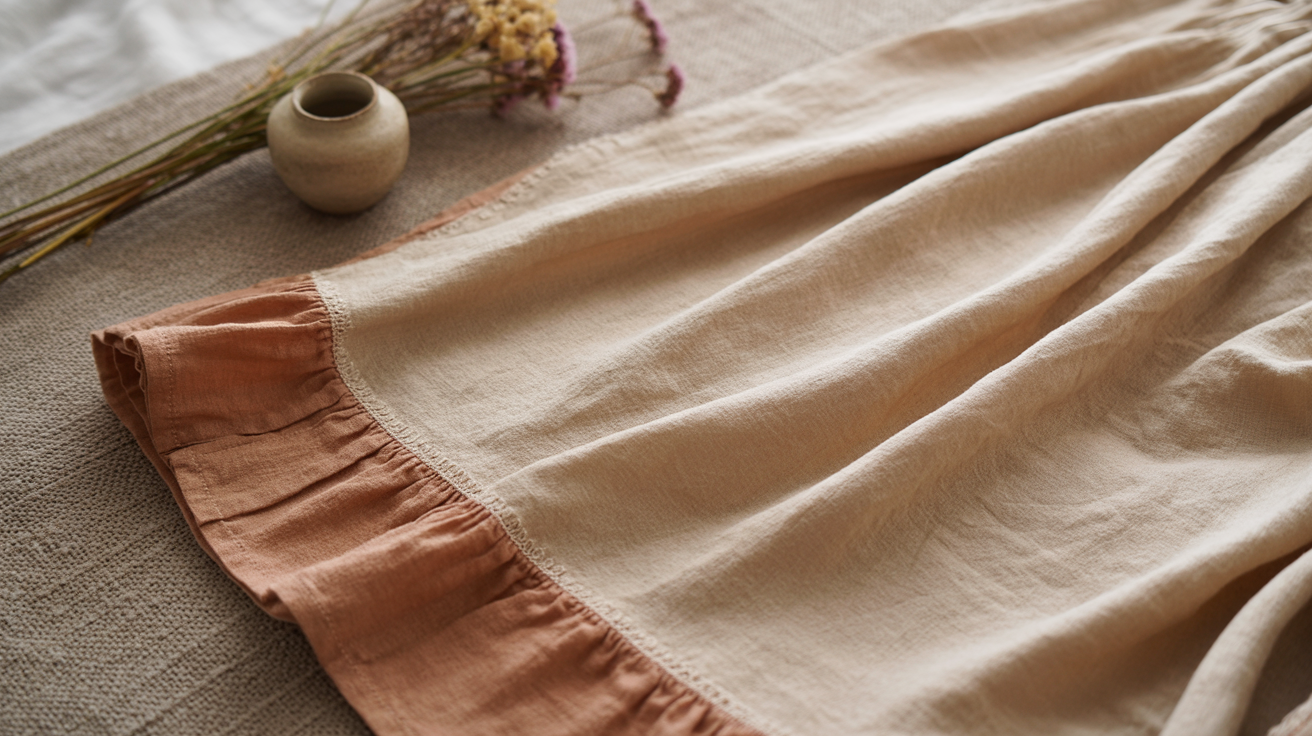
- Linen: The most breathable natural fabric available. Linen becomes softer with every wash, holds its shape well over time, and has a natural texture that photographs beautifully. It wrinkles, which some people find inconvenient, but in a maxi dress this tends to read as relaxed rather than untidy. Ideal for summer and warm-weather occasions.
- Cotton: Softer than linen from the outset, slightly less breathable but more forgiving in terms of drape. Cotton voile and cotton muslin are particularly well-suited to maxi dresses because they are lightweight and move well. Cotton is also the easiest natural fabric to care for at home.
- Muslin: A loosely woven cotton fabric with a gauzy quality. Muslin maxi dresses have a soft, slightly translucent appearance that works well in layered styles. The fabric is exceptionally light and comfortable in heat.
- Wool: Less common in maxi dresses but relevant for transitional and cooler seasons. A fine wool or wool-blend maxi can work for autumn weddings or evening events where warmth is a consideration.
Avoid polyester and polyester blends in maxi dresses intended for warm-weather wear or active days. These fabrics trap heat, do not absorb moisture, and tend to look less refined than natural alternatives regardless of their initial appearance.
How to Style a Maxi Dress Across Different Occasions
One of the practical advantages of a well-chosen maxi dress is its adaptability. The same dress can move between contexts with relatively small adjustments to accessories and layering.
For a summer maxi dresses for women worn to a daytime wedding or garden party: keep accessories minimal. A simple leather sandal, a woven basket bag, and a single piece of jewellery — a hammered gold cuff or a pair of small hoop earrings — is sufficient. Adding too many elements to a dress that already has visual interest tends to create noise rather than style.
For an evening or more formal setting: the same dress can be elevated with a structured linen blazer or a fine knit cardigan, a leather clutch, and slightly more considered jewellery. The shift is subtle but effective.
For travel or everyday wear: a maxi dress in a neutral linen is one of the most practical travel garments available. It packs without significant wrinkling, requires no ironing beyond a gentle shake, and can be worn across multiple contexts — sightseeing, a dinner reservation, a beach walk — without changing.
For layering in transitional seasons: a fitted long-sleeve top underneath a sleeveless or thin-strap maxi extends its wearable season significantly. This approach works particularly well with linen dresses in deeper autumn tones.
FAQ
What is the best fabric for a maxi dress in summer?
Linen and cotton muslin are the best choices for warm weather. Both fabrics breathe well, absorb moisture, and become more comfortable as the day warms. Avoid synthetic fabrics, which trap heat and tend to feel uncomfortable in high temperatures.
Can petite women wear maxi dresses?
Yes. The key is correct hemming — the dress should sit at the ankle rather than the floor — and a silhouette that creates a continuous vertical line. Empire waists, wrap cuts, and vertical embroidery details all work well for petite frames. Avoiding large horizontal prints and excessive volume at the hem will help maintain proportion.
What should I wear to a summer wedding as a guest?
A maxi dress in a natural fabric — linen, cotton voile, or muslin — in a seasonal colour such as sage, dusty rose, terracotta, or warm ivory is an excellent choice for a summer wedding guest. Keep accessories considered rather than elaborate, and choose a dress with a defined waistline for a more polished appearance.
Are boho maxi dresses appropriate for weddings?
A boho maxi dress is appropriate for most weddings, particularly outdoor, garden, or destination ceremonies. The key is choosing a dress in a quality natural fabric with clean construction — embroidery and artisan details are welcome, but the overall impression should be intentional rather than casual. For very formal or black-tie weddings, a richer fabric and a more structured silhouette will be more appropriate.
How do I choose a maxi dress for a plus size figure?
Look for a defined waistline — a wrap cut or a tie-waist A-line both work well. Choose fabrics that drape rather than cling, and a neckline that suits your comfort level. A V-neck or square neck tends to be particularly flattering. Avoid fabrics with significant stretch, as these can pull and shift throughout the day. Natural fibres such as linen and cotton will drape more gracefully than synthetic alternatives.
Conclusion
A maxi dress chosen with care — the right cut for your proportions, a natural fabric suited to the occasion, a design rooted in something more lasting than seasonal trend — is one of the most versatile garments in a considered wardrobe. It works for weddings, for travel, for warm evenings, and for the kind of everyday dressing that benefits from simplicity and quality rather than novelty. At Lariko Studio, the approach to maxi dresses and all slow fashion pieces is built on exactly these principles: natural linen, cotton, and muslin, silhouettes with genuine wearability, and a design language drawn from boho and ethnic textile traditions that have depth beyond any single season. If this resonates with how you think about clothing, explore the Lariko Studio collections to find pieces made to be worn, not just owned.
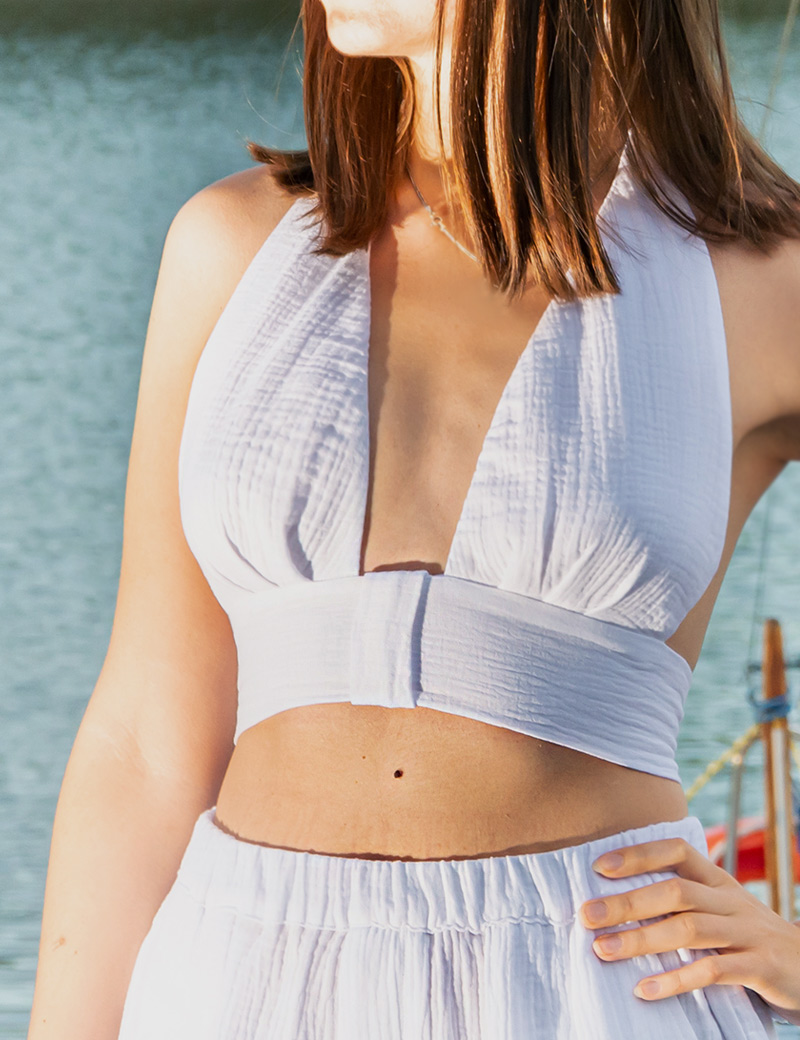
Discover natural fabric pieces from Lariko Studio — crafted for occasions like this:
|
|